Shilpa Srivastava
Posting
Search Api link
/people/people/shilpa-srivastava


Dr Anshuman Behera is a Professor and the Academic Head at the National Institute of Advanced Studies (NIAS), Bengaluru. At the NIAS, he is associated with the Conflict Resolution and Peace Research Programme in the School of Conflict and Security Studies. He is also a Visiting Professor at the Malviya Centre for Peace Research, Banaras Hindu University and a Non-resident Visiting Fellow at the Centre for National Security Studies, Ramaiah University of Applied Science, Bengaluru. His research and teaching interests are in the areas of Conflict Studies, Democracy, Development, Governance, and conflict, impact assessment of development projects and corporate social responsibilities, political theory, religious fundamentalism and terrorism in South Asia, internal security in India, and Natural resource management.
The important research projects that Dr Behera is presently conducting are: Impact assessment of the corporate social responsibility activities of the industries, especially the Oil India Limited (OIL) and the Numaligarh Refinery Limited (NRL) in Assam. These studies evaluate the social, political and the economic impacts of OIL and the NRL on the society. Similarly, the research study on the Natural Resource Management, Utilisation and Adaptation investigates the social and the ecological aspects of resource management and utilisation in the Western and Eastern Ghats of India. The NIAS Democracy Forum (NDF), an academic initiative conducts training programmes, workshops, lecture series and evidence-based research on various aspects of federalism, local governance and democratic participation in India. As a part of this initiative, Dr. Behera also conducts research on the issues of formal and informal decentralisation in Manipur and Mizoram and the Maoist affected states in Central and Eastern India.
He teaches courses on ‘Theoretical Constructs of Understanding Conflict’, ‘Qualitative Research Methodology in Social Sciences’, and ‘Approaches to Conflict Resolution’.
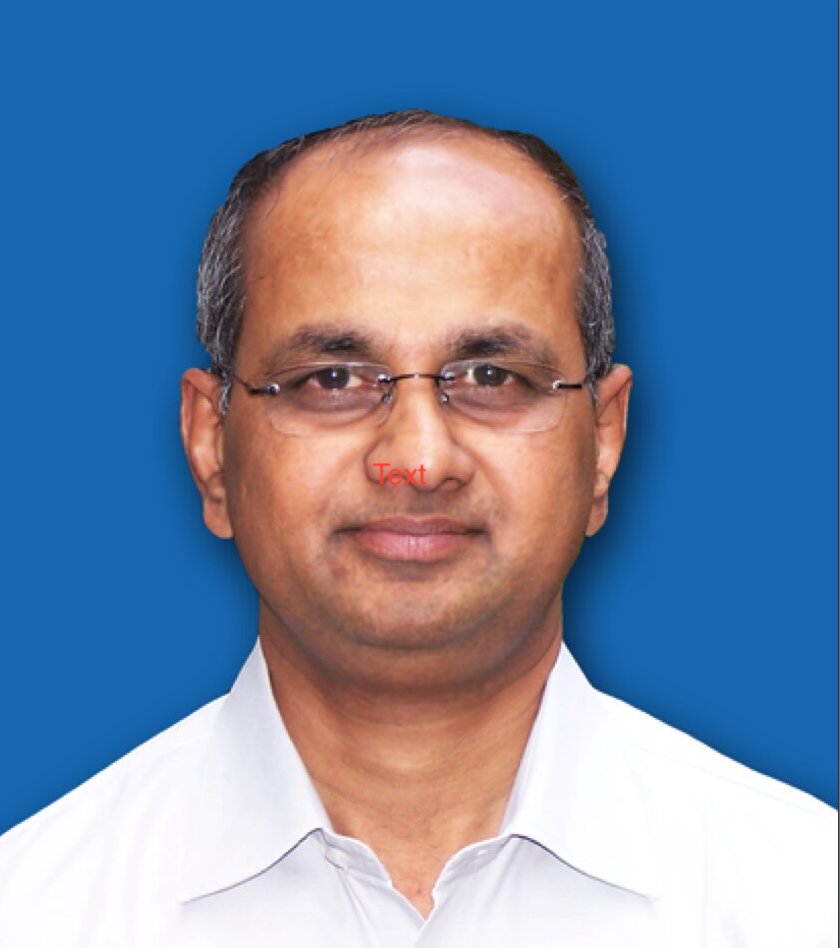
Diwakar holds the position of “ISRO Chair Professor” at National Institute of Advanced Studies (NIAS) and works on research projects related to space technology, particularly related to data processing from Earth Observation Satellites and Geospatial Technologies.
Prior to joining NIAS, he served for over three decades at Indian Space Research Organisation (ISRO) and held several senior level positions and was responsible for developing many diverse applications of space technology to help the nation in its developmental activities.
Diwakar was awarded his PhD in “Participatory GIS: Participator Geomatics in process-based watershed development” from the National Institute of Technology (NITK), Surathkal, Karnataka and has significantly contributed in the area of geospatial technology and its use in wide variety of applications. He has extensively worked in the use of remote sensing and geospatial technology to bring about many applications of space technologies that are popularly being used in the country today. While he has contributed in many application areas of national importance, related to Land, Water, and Ocean, he was also responsible for a major WebGIS initiative in the country, such as, setting up of “Bhuvan Geoportal” for online geospatial services on natural resources management.
During his career in ISRO he has held many key positions, such as, Head-Regional Remote Sensing Service Centre, Bengaluru, Deputy Director, National Remote Sensing Centre (NRSC), Director of Earth Observation System & Disaster Management Support Programme, and many others. He retired as Scientific Secretary, ISRO. Apart from this, he has also held key positions in representing ISRO in many international forums, to name a few, Committee of Earth Observation Satellites (CEOS), Board member in International Charter “Space & Major Disasters”, Principle point of contact for UN-ESCAP.


MB Rajani's research has two inter-related facets: analysing cultural landscapes using geospatial data to identify new features of archaeological interest and advancing the usage of such analysis towards preservation of built heritage in the face of rapid urbanization. Her primary scientific contribution has been to develop a methodology for detecting tell-tale signs of past human activities on landscapes from satellite imagery and integrating these findings with other spatial data to generate new inferences and novel hypotheses about the past. Her work has therefore expanded the field of archaeology to include the study of human impact on landscapes.
Her recent book Patterns in Past Settlements (2021) aims at imparting this knowledge to larger research and academic communities.
She is a member of Indian National Young Academy of Science 2018-2022, a Young Affiliate 2019-2023 of The World Academy of Sciences and recipient of Rachapudi Kamakshi Memorial Young Geospatial Scientist Award 2011 and P.R. Pisharoty Memorial award 2019 awarded by the Indian Society of Remote Sensing


Dr. Srikumar M. Menon is an architect specializing in ancient and early architecture of the Indian subcontinent. After graduating from the Department of Architecture, T. K. M. College of Engineering in 1993, Srikumar spent 6 years in architectural practice at Bangalore as well as research on the design of astronomical observatories at the Inter University Centre for Astronomy and Astrophysics, Pune, before taking up teaching at the Faculty of Architecture, Manipal Institute of Technology, at Manipal. After teaching at Manipal for 15 years, he moved to the National Institute of Advanced Studies, where he is works as Associate Professor currently.
Srikumar’s academic interests focus on ancient architecture – prehistoric monuments, as well as later monuments, such as stupas and temples. His Ph. D. investigated Indian megaliths for possible intentional astronomical alignments and he was awarded the Prof. D. S. Achyutha Rao Memorial History Research Fellowship for the same, in 2007. Subsequently (2012-14), he was also awarded the Homi Bhabha Fellowship for studying “Ancient Landscapes of South India.” Under this project, he has studied the sites of the Malaprabha Valley, Hampi-Hire Benakal region and the Sannati-Sirival region, all in northern Karnataka, leading to deep insights about the continuity of commemorative traditions from prehistoric to later times, and the influence of prehistoric architecture on later monuments. He is the author of two books – Ancient Stone Riddles: Megaliths of the Indian Subcontinent and Comets: Nomads of the Solar System, both published by Manipal University Press.
Currently, in addition to continuing his work on megaliths and archaeoastronomy, Srikumar is also engaged in efforts to understand evolution of principles of construction and stone-working in early temple architecture, and the practice of architecture in Early Historic to Medieval Periods in India, including tracking early artisans of ancient India.


Prof Narendar Pani is an economist by training who takes a multidisciplinary approach to the Indian political economy issues. In this effort, he has relied on a method derived from the writings of MK Gandhi. Over the last three and a half decades, he has held positions in academia and the media. His books include, ‘Inclusive economics: Gandhian method and contemporary policy’ (Sage, 2002); ‘Redefining Conservatism: An essay on the bias of India’s economic reform’ (Sage, 1994); and ‘Reforms to pre-empt change: Land legislation in Karnataka’ (Concept, 1983). He is also one of the editors of ‘Bengaluru, Bangalore, Bengaluru: Imaginations and their times’ (Sage, 2010).
He was a member of the Task Force on Manufacturing set up by the Government of Karnataka, 2013.
He was a member of the Working Group set up by the Planning Commission, New Delhi, to review the performance of the Mahatma Gandhi National Rural Employment Guarantee Act.
He was a member of the Steering Committee for the Evaluation Study on Mahatma Gandhi National Rural Employment Guarantee Act (MGNREGA) conducted by the Programme Evaluation Organization of the Planning Commission, New Delhi.
He was a member of the Board of Governors of the Institute for Social and Economic Change, Bangalore, from 2003 to 2009.
He was a member of the editorial advisory board of the Journal for Social and Economic Development, an academic journal brought out by the Institute for Social and Economic Change Bangalore, India, from its inception till 2009.
He won the Citibank Pan Asia Journalism Award for 1992. The award was given for writing on trade issues. The piece that won the award was on the environment as a trade barrier.
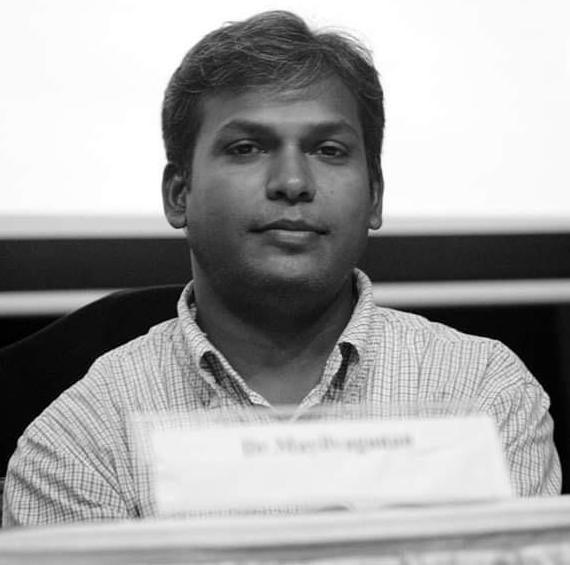
M. Mayilvaganan, PhD is an Associate Professor at the International Strategic & Security Studies Programme (ISSSP), School of Conflict and Security Studies (SCSS), National Institute of Advanced Studies (NIAS), in Bangalore, India, where he leads ISSSP’s work on Indo-Pacific, South and Southeast Asia, Borderland studies and foreign analysis of major powers. His research interests focus on political, strategic and security issues concerning India and its neighbourhood (South and Southeast Asia in particular), Indo-Pacific, foreign and security policies of China, the US, Japan and India, Northeast India Borderland and the Non-Traditional Security challenges. Also, he is currently a BOBP Fellow at the inter-governmental agency of FAO (UN).
Before joining NIAS, Mayil worked with the University of Malaya, Kuala Lumpur as a Visiting Senior Lecturer, where he taught South Asia in International Relations, Modern Warfare and International Politics; Associate Fellow at the Institute of Defence Studies and Analysis (IDSA), New Delhi specialising on Sri Lanka and Research Associate at the Institute of Peace and Conflict Studies (IPCS), New Delhi, focusing on Kashmir, among other professions. He also spent some time as a researcher in Canada and the US. He holds a PhD degree from the School of International Studies in the Jawaharlal Nehru University (JNU), New Delhi in India.