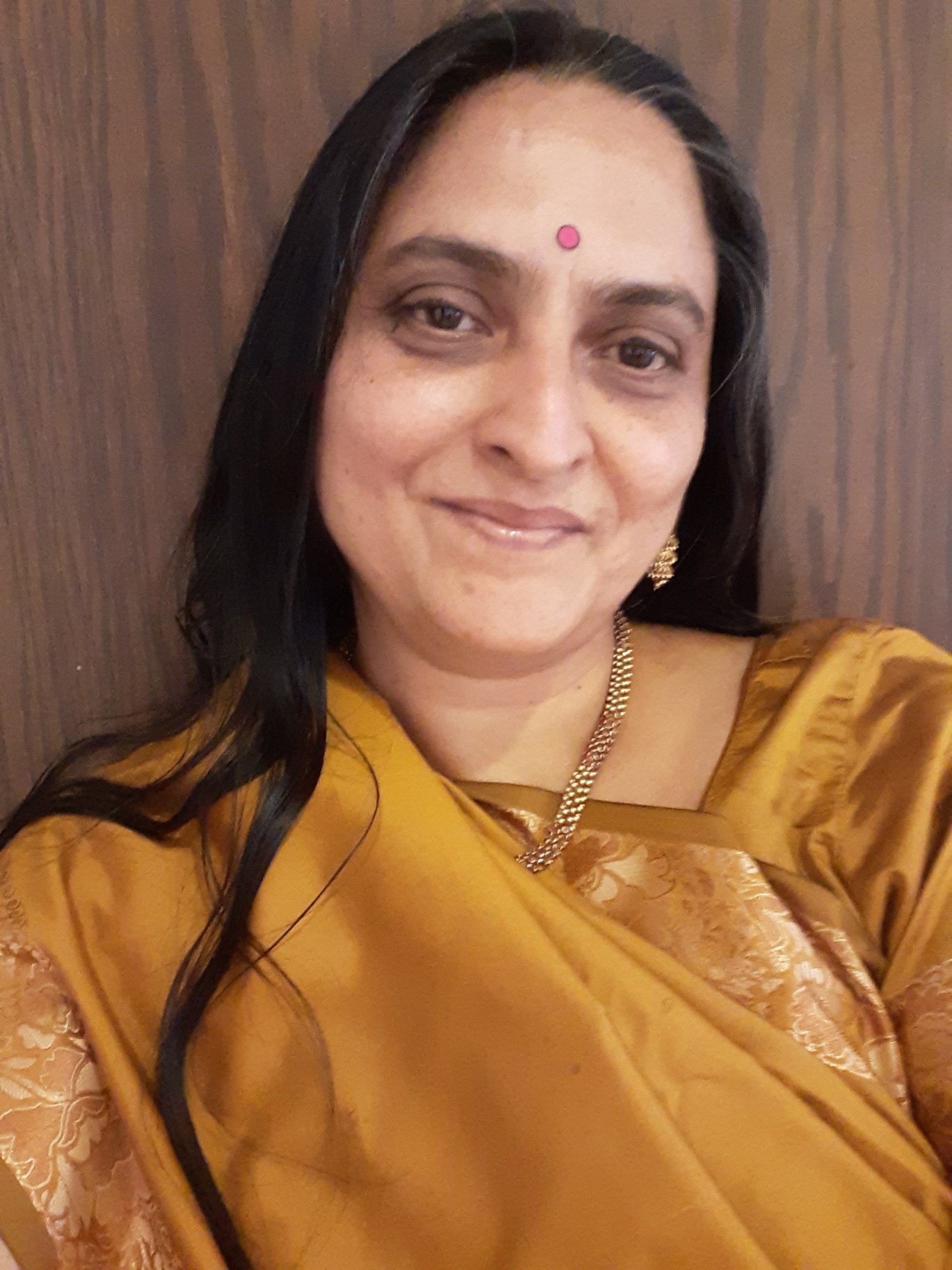
Programme Head

Narendar Pani

Image of the person
Narendar Pani
Designation
JRD Tata Chair Visiting Professor
Room no
S-8
Body

Prof Narendar Pani is an economist by training who takes a multidisciplinary approach to the Indian political economy issues. In this effort, he has relied on a method derived from the writings of MK Gandhi. Over the last three and a half decades, he has held positions in academia and the media. His books include, ‘Inclusive economics: Gandhian method and contemporary policy’ (Sage, 2002); ‘Redefining Conservatism: An essay on the bias of India’s economic reform’ (Sage, 1994); and ‘Reforms to pre-empt change: Land legislation in Karnataka’ (Concept, 1983). He is also one of the editors of ‘Bengaluru, Bangalore, Bengaluru: Imaginations and their times’ (Sage, 2010).  

He was a member of the Task Force on Manufacturing set up by the Government of Karnataka, 2013. 

He was a member of the Working Group set up by the Planning Commission, New Delhi, to review the performance of the Mahatma Gandhi National Rural Employment Guarantee Act. 

He was a member of the Steering Committee for the Evaluation Study on Mahatma Gandhi National Rural Employment Guarantee Act (MGNREGA) conducted by the Programme Evaluation Organization of the Planning Commission, New Delhi. 

He was a member of the Board of Governors of the Institute for Social and Economic Change, Bangalore, from 2003 to 2009. 

He was a member of the editorial advisory board of the Journal for Social and Economic Development, an academic journal brought out by the Institute for Social and Economic Change Bangalore, India, from its inception till 2009. 

He won the Citibank Pan Asia Journalism Award for 1992.  The award was given for writing on trade issues.  The piece that won the award was on the environment as a trade barrier.

Phone
E-mail
narendar@nias.res.in
Department
Administrative Position
Dean
Search Exclude Entity
No

Sindhu Radhakrishna

Image of the person
Sindhu
Designation
Professor
Room no
S 23
Body

Joined NIAS on 1st September 2002. Most significant research contribution: Study on non-human primates contributing to significant understanding of human sociality. Dr. Sindhu Radhakrishna holds a master's degree in psychology and a doctorate in animal behaviour. 

Her research interests are in the fields of primatology, behavioral ecology and conservation biology, and her work has focused on gaining a better understanding of social behaviour and communication in nocturnal primates. She was awarded the INSA Young Scientist's Award in recognition of the significance of her doctoral research on the behaviourial ecology of the Slender loris, a nocturnal primate found in southern India

E-mail
sindhu@nias.res.in
sindhu.radhakrishna@gmail.com
Department
Administrative Position
Head
Search Exclude Entity
No

R Srikanth

Image of the person
R Srikanth
Designation
Professor
Room no
S-11
Body
R Srikanth

R. Srikanth is the Dean of the School of Natural Sciences & Engineering, and also heads the Energy, Environment, and Climate Change Program.  He graduated from the Indian School of Mines in 1984 and was awarded the ISM Gold Medal.  He worked in coal mines for six years before commencing his research at the Pennsylvania State University where he completed a dual Ph.D. in Mining Engineering & Operations Research. He joined NIAS in 2016 after a 20-year long career in industry, primarily in Tata Steel. He is currently involved in several Government-appointed committees related to energy security alongside his other duties as faculty and Dean at NIAS.

Research Interests: Air pollution and public health, energy security, coal and mineral policies, environmental policy and governance, sustainable development, and climate change.

E-mail
rsrikanth@nias.res.in
Department
Administrative Position
Dean
Search Exclude Entity
No

Sangeetha Menon

Image of the person
people
Designation
Professor
Room no
F6
Body

Sangeetha Menon joined National Institute of Advanced Studies, in January 1996, in the Indian Institute of Science campus, Bangalore (India). Her interview and appointment was led by an illustrious group of scientists like Dr Raja Ramanna (Founding Director of NIAS), Prof CV Sundaram, Prof BV Sreekantan and Prof RL Kapur. Subsequently she conceptualised and commenced the NIAS Consciousness Studies Programme along with BV Sreekantan (former Director, TIFR and Honorary Professor, NIAS). This was the first academic group that started in India to study consciousness with an interdisciplinary and a multidisciplinary mandate. Sangeetha is a philosopher with a keen interest in consciousness. Her major area of research is in philosophy of psychology. Her expertise is in Indian philosophy, consciousness studies, philosophy of psychology, philosophy and psychology of self. She works with her colleagues at NIAS and collaborators worldwide to create and encourage a first-person centered approach to understanding consciousness and cognitive capabilities that favours experiential well-being for all. Dr Menon's professional qualifications include degrees in biology and philosophy. She is a first rank holder and gold medalist from Maharaja's College for Women, Trivandrum for post-graduate degree in philosophy. The thesis for her doctoral degree, from University of Kerala, is on the concept of consciousness in the Bhagavad Gita which was completed with junior and senior research fellowship from University Grants Commission, India.

Research Interest: 

Prof Menon's major area of research is in philosophy of psychology. Her expertise is in Indian philosophy, consciousness studies, philosophy of psychology, philosophy and psychology of self. She works with her colleagues at NIAS and collaborators worldwide to create and encourage a first-person centered approach to understanding consciousness and cognitive capabilities that favours experiential well-being for all. Sangeetha Menon started her research with a comparative study of consciousness, from the East and the West, focusing on the theories of agency, emotion, freedom, self, and human well-being in the Bhagavad Gita. Subsequently, she focused on Indian philosophical concepts criss-crossing the works of philosophers: Sankaracharya, Abhinavagupta, Narayana Guru et al. and bringing in Indian aesthetics and dramaturgy to understand cognitive dimensions of creative expressions and personal agency. Her initial papers argue for an epistemological shift that considers the ontological primacy of self, and the importance of the experiencer that would present the 'harder problem' of consciousness. While some of her initial studies were deeply metaphysical and philosophical in approach, she moved on to engaging philosophy with biology and psychology to understand the primary issue in consciousness, which is the 'self'. She is one of the originators of the field of Indian psychology, guiding research in well-being studies, life-sustaining values, self-transformation, and artistic experience. One of her primary contributions in consciousness studies is presenting and engaging with the concept and experience of self from the neurobiological and philosophical point of view, and theorising a 'self-challenged brain and brain-challenged self'.

Phone
E-mail
sangeetha.menon@nias.res.in
prajnanata@gmail.com
Department
Administrative Position
Dean
Search Exclude Entity
No

Sharada Srinivasan

Image of the person
Sharada
Designation
Professor
Room no
S 13
Body
Sharada Srinivasan

Prof. Sharada Srinivasan is Professor at the National Institute of Advanced Studies (NIAS), Bengaluru. She was elected International Honorary Member of the American Academy of Arts and Sciences in 2021 in Archaeology. She received the Padmashri, the fourth highest civilian award from Government of India in Archaeology in 2019.  Sharada has made pioneering contributions to the study of archaeology and history of art from the perspective of exploring engineering applications.  

Prof. Sharada Srinivasan’s landmark contributions include archaeometric characterisation of bronzes of South India using lead isotope analysis and archaeometallurgical studies on ancient mining and metallurgy in southern India. These span studies on the production mechanisms of high carbon wootz steel and documentation of artisanal technologies such as Aranmula high tin bronze metal mirror making, bronze casting at Swamimalai and ancient and continuing traditions of high-tin bronze working, while she has worked on artefacts in the Government Museum, Chennai, British Museum, Victoria and Albert Museum, London, ASI amongst others. Prof. Sharada Srinivasan is a Fellow of the Royal Asiatic Society of Great Britain and World Academy of Art and Science.

Her awards include the INAE Indian National Academy of Engineering Woman Engineer in Academia 2021 Award, Distinguished IITB Alumnus Award, Dr. Kalpana Chawla Young Women Scientist Award for 2011, the Indian Institute of Metals, Certificate of Excellence 2007, Materials Research Society of India Medal 2006, Malti B. Nagar Ethnoarchaeology Award (2005), DST-SERC Young Scientist Fellowship, Flinders Petrie Medal 1989 from University of London, Materials Research Society Graduate Student Award 1996, DST Nurture Scheme and Young Scientist Awards and the British Chevening Scholarship for her Phd work. She was Forbes Research Associate at the Department of Scientific Research and Conservation, Freer Gallery of Art, Smithsonian Institution, USA in 1999 and Homi Bhabha Fellow at Indian Institute of Science, Bangalore from 1996-98.  She has been a co-recipient of international awards from UKIERI, UK, (on pioneering iron and steel metallurgy), AHRC, UK, (on interfaces between archaeology and drama), SSHRC Canada, Royal Society, UK, and National Science Foundation, USA.  

She is first author of the book ‘India’s Legendary Wootz Steel’,  contributing author to ‘Ecstasy of Classical Art’, the bronze catalogue of National Museum, Delhi and co-editor of ‘Digital Hampi’ and ‘Performing on the Periphery’.  She is on the Standing Committee of the international Beginning of the Use of Metals and Alloys Conference.  She has been an accomplished exponent of the classical dance form of Bharata Natyam and has given lecture-demonstrations such as on the artistic and scientific perspectives on the Chola Nataraja bronzes at Royal Academy of Arts, London (2007) and with a photo-exhibition at Space City, Toulouse (2009) apart from national venues.  She earned her PhD from the Institute of Archaeology, University College London (1996) on Archaeometallurgy of South Indian bronzes; MA from School of Oriental & African Studies, London (1989) and BTech in Engineering Physics from IIT Bombay (1987).

E-mail
sharasri@gmail.com
sharadasrini@nias.res.in
Department
Administrative Position
Head
Search Exclude Entity
No

Anitha Kurup

Image of the person
Anitha Kurup
Programme
Designation
Professor
Room no
S 05
Body
Anitha B K

Professor Anitha Kurup is the Head of the Education Programme and the Head of the NIAS Education for the Gifted and Talented (NIAS-EGT) at the National Institute of Advanced Studies (NIAS) Bengaluru, India. She was the Academic Head and Chair of the PhD Program, NIAS (2018-2020). She is the Dean of the School of Social Sciences.

She is currently leading the National Gifted and Talented Education Program in India anchored at NIAS. The programme was initiated by the office of the Principal Scientific Adviser, Government of India in 2011. She and her team have developed Indian-based identification protocols and mentoring mechanisms for gifted children in India in the age group 0-18 years for different populations. They have developed a multi-stage multi-level model of mentoring for gifted children in India that are age and context-specific.

Prof Kurup was part of the National Core Committee that prepared the four-year integrated pre-service teacher training course submitted to the National Council of Teacher education. Her research and policy and advocacy work resulted in the inclusion of Education for the gifted and talented in the National Education Policy 2020.

Her research interests span the broad disciplines of education and gender. Her key publications “Trained Scientific Women Power: How much are we Losing and Why?” and “Trends Report: Creation and Analysis of Database of PhDs in India (1998-2007)” have been widely appreciated. These reports have been used to advocate for a paradigm shift in relation to policies on women in STEM as well as the creation of AISHE database in India. Prof Kurup’s research expertise is sociology of education, gender and science, institutional and policy studies, and pedagogic practices. In the area of gender her expertise covers a wide spectrum, from examining conceptual and methodological strands of gender relations to women in leadership roles, and women and work. Her research career spanning over three decades is marked by her passion and motivation to undertake research in critical areas, hitherto unexplored within the Indian subcontinent. The hallmark of her research career has been the innovation methodologies adopted for large-scale inter-institutional research studies questioning existing theoretical frameworks to find solutions to real world problems. Thus, she has made critical contributions to the field of education in India. She has several publications to her credit.

Prof Kurup has provided consultancies to large international organisations like the World Bank, NOVIB, and has been an educational consultant to the government of India and the Government of Karnataka over the last two decades. She is among the few often noted expert in the field of education and gender at the national level. She is a Subject Expert in Education for the Karnataka Evaluation Authority, Government of Karnataka(2019- till date). She served as an Expert and Member RFD in school and continuing education; and higher education, Government of Karnataka for the period 2011- 2016.

Click here for: LinkedIn 

E-mail
bkanitha@nias.res.in
Department
Administrative Position
Dean
Search Exclude Entity
No