Shreedhar Vijayakrishna
Posting
Search Api link
/people/people/shreedhar-vijayakrishna

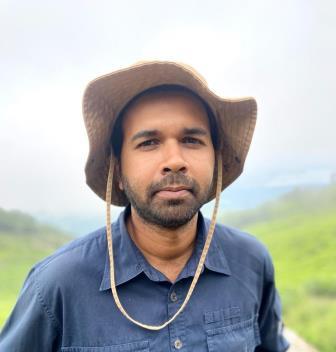
Dr. Nishant Srinivasaiah is a behavioural ecologist whose work focuses on elephants and the complexities of human–elephant coexistence across its range countries. With over 16 years of field-based research experience, he has led and contributed to studies on elephant movement, decision-making, conservation governance and conflict mitigation across protected and human-dominated landscapes. Nishant holds a PhD from the National Institute of Advanced Studies (NIAS), Bangalore and an MSc in Wildlife Biology and Conservation from the National Centre for Biological Sciences, Tata Institute of Fundamental Research. He is also a member of the Asian Elephant Specialist Group at the International Union for Conservation of Nature and Natural Resources (IUCN) – Species Survival Commission (SSC) and recipient of multiple conservation awards. He continues to integrate science, policy and community engagement to advance long-term elephant conservation along with Governmental and Non-Governmental Organisations across elephant Range countries.


Mr. Subroto Dey’s thesis titled Mapping Life-Paths of Adivasi Youth: Institutions and Communities has been evaluated and he is declared eligible for the Award of Degree of DOCTOR OF PHILOSOPHY (Ph.D) by the Manipal Academy of Higher Education (MAHE). He worked under the guidance of Prof. Shivali Tukdeo.
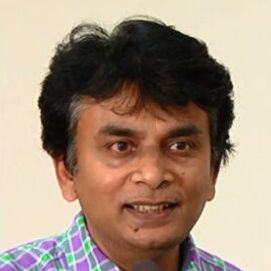
Prof D. Suba Chandran is the Dean of the School of Conflict and Security Studies at NIAS. Within the School, he heads two Programmes - Conflict Resolution & Peace Research; and Science, Technology and International Relations.
Pakistan Reader: Pakistan is his primary area of research interest; currently, he is working on a manuscript looking at 75 years of Pakistan. He teaches a course on contemporary Pakistan. He has been a regular visitor to Pakistan, and has been part of numerous track-II dialogues with Pakistan; he has also worked and published with scholars from Pakistan.
Peace and Conflict Research: Besides Pakistan, he works on issues relating to peace and conflict; he is currently researching on two primary areas – “Conflict Peripheries” trying to find why most of the conflict regions are situated in geographic corners, and on “Peace Gap” trying to find why peace does not prevail, despite the end of violence and conflict. He leads the International Peace Research Initiative (IPRI) at NIAS. He is also the regional representative of the Global Partnership to Prevent Armed Conflict (GPPAC). He teaches an online course on peace research.
Global Politics and Area Studies: He coordinates the NIAS Global Politics initiative, which looks at the contemporary world order, and four area studies – Pakistan, Europe, Africa and Maritime. In the long run, the area studies are expected to branch out into independent disciplines. He also teaches an online course on “Contemporary World Affairs.”
He works with a young, colourful and an extremely dedicated team who leads the research on area studies relating to Pakistan, Africa, Europe, Sri Lanka and Myanmar, and issues relating to Peace & Conflict, Arctic, Space, and the Himalayas. His team coordiantes “Global Politics Young Voices (GPYV)” an exclusive network of young scholars, and take the lead in publishing the following at NIAS: Pakistan Reader Evening Brief (Daily), Pakistan Weekly, Europe Daily Brief, Europe Monitor (Monthly), Africa Weekly, Conflict Weekly, and The World This Week. Together, they coordinate the “Young-IPRI” network, aimed at bringing young scholars working on issues relating to peace and conflict on a common platform.
IR Networks: He coordinates three academic networks – the International Studies Network Bangalore (ISBN), International Peace Research Initiative (IPRI), and Maritime Studies. Academic institutions from Goa, Bangalore, Chennai and Pondicherry are a part of the above networks.
Science Diplomacy: He also leads the “Science Diplomacy” initiative within the institute, aimed at bringing S&T and International Relations together. He coordinates the BRICS-Young Scientists’ Forum.
He is an Associate at the Pakistan Study Research Unit (PSRU), University of Durham, UK. Earlier, he was a Visiting Fellow at the following places: the Department of Peace Studies, University of Bradford, UK; ACDIS, University of Urbana-Champaign; and the University of Jammu, J&K.
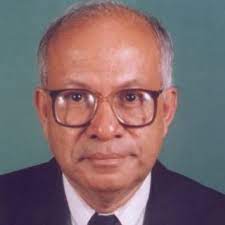
Joined NIAS on 2nd July 2004. Most significant research contribution: Pioneered the study on the societal implications of nanotechnology, and development of an atlas of Indian science. After an outstanding academic record in Loyola College, Chennai and the Indian Institute of Science, Bangalore, Prof. Ranganathan obtained his PhD from Cambridge University, UK in 1965. His academic career as an educator and researcher in metallurgy for the past four decades has been outstanding. His seminal research contributions have advanced our understanding of the structure of metals through 300 publications including books on Wootz steel and new geometries. He is currently Honorary and INAE Distinguished Professor at the Indian Institute of Science and Jawaharlal Nehru Centre for Advanced Scientific Research, Bangalore. His contributions have been recognised by fellowships to five academies and numerous awards. His interests at NIAS include materials heritage, an atlas of India in Science and Societal Impact of Nanotechnology