
School of Conflict and Security Studies
about_school
Rohini Reenum
Image of the person

Designation
DOCTORAL STUDENT
E-mail
rohinireenum@nias.res.in
Posting
Department
Title of the thesis
The idea of Ocean Governance and the High Seas Treaty
Guide
Doctoral and Other Programmes
Search Exclude Entity
No
Jenish Anil Trivedi
Image of the person

Programme
Designation
DOCTORAL STUDENT
Body
Jenish is a PhD scholar, with an interest in understanding and addressing social conflicts and resource-related tensions. His research interests focus on conflicts, particularly in the context of caste, and resource conflicts and their implications for development. He is inclined towards understanding development induced vulnerabilities and how ideas of development must be complemented with ethics and sustainability. He has worked as a Project Associate on a Social Impact Assessment project during 2022-2023. He also takes an interest in history, exploring the annals of the past and complementing them with present dynamics to understand the origins of conflicts. Alongside academic pursuits, he also has a keen interest in studying Indian languages.
E-mail
jenishtrivedi@nias.res.in
Posting
Department
Title of the thesis
Contours of Conflict: Exploring Dynamics of Development and Democracy in India.
Guide
Doctoral and Other Programmes
Batch
2023
Search Exclude Entity
No
Saransh Kumar
Image of the person
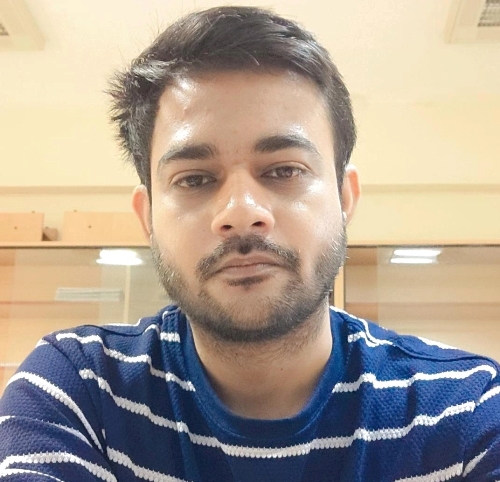
Programme
Designation
DOCTORAL STUDENT
Body
Saransh is a PhD Scholar in NIAS. He is a Geographer by training. He completed his graduation and post-graduation from University of Delhi and Delhi School of Economics. Previously, he has worked as associate in the project titled ‘Social Impact Assessment of Kalpasar Dyke in Gulf of Khambhat ‘. He is interested in applications of Remote sensing and Geoinformatics in Impact Assessment Methodologies particularly in large scale projects. As a part of the project, he has developed an in-house digital and offline socio-economic data collection tool, undertook field survey over 90 days, performed analytics and co-authored multiple reports for development agencies. He has presented research papers in international conferences, three of which are in review currently and expecting to be published in near term. His academic interests range from modelling socio-physical phenomena, algorithmic design, Cartography, Statistical analysis among others.
E-mail
saransh@nias.res.in
Posting
Department
Title of the thesis
Towards Integrated Impact Assessment Studies: Interrogating the impacts of Char Dham Project in Uttarakhand.
Guide
Doctoral and Other Programmes
Batch
2023
Search Exclude Entity
No
Climate Change Exacerbated Sexual and Gender-Based Violence: Role of the Feminist Foreign Policy
Feminist foreign policy (FFP) ensures the representation and participation of women both nationally and internationally. Initially, it aimed to focus on some special areas relating to women, peace, and security especially sexual violence in conflict and women's representation in the peace process. Now, the ambit has been broadened and issues relating to climate change are also included. The research has already proved that women suffer double victimization as a consequence of climate change.
Making Sense of Nepal’s Nationalism: Implications for the India–Nepal Relationship
The assertion of (territorial) nationalism by Nepal has serious implications on its bilateral relationship with India. Once dominant, the singular narrative of the upper-caste Hindu Parbatiya nationalism is increasingly encountering competing narratives emerging from the marginalised Janajatis and the Madhesis of Nepal. Accordingly, several nationality sentiments that were sidelined earlier have now become salient.