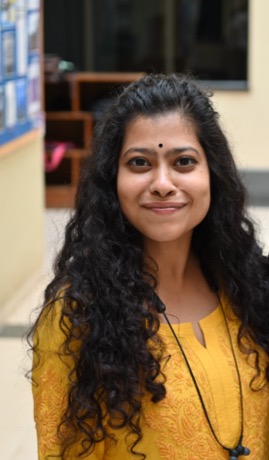
Rekha
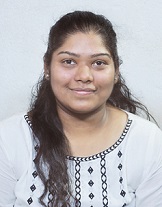
I am currently working as a Post-Doctoral Researcher at the National Institute of Advanced Studies (NIAS), IISc Campus, Bengaluru. My research focuses on air pollution, exposure assessment, atmospheric emissions, and environmental health, with an emphasis on integrating
science, policy, and public health perspectives. I completed my PhD from IIT Madras in September 2019, where my research focused on
human exposure to indoor air pollution in rural South India and the evaluation of clean cooking interventions. My work involved extensive field-based monitoring, longitudinal exposure assessment studies, and assessment of interventions such as improved cookstoves and the
Pradhan Mantri Ujjwala Yojana (PMUY). I hold an interdisciplinary Master’s degree in Technology and Development from CTARA, IIT
Bombay, and a Bachelor’s degree in Chemical Engineering from Osmania University. My interdisciplinary background enables me to combine engineering approaches with environmental science to address complex air quality and sustainability challenges. My current research focuses on air pollution assessment, health risk assessment, HFC emission quantification, low-cost sensor evaluation, and air quality impacts of emerging energy and transport transitions. I have experience in environmental data analysis, atmospheric measurements, and policy-oriented research related to air quality management. I have authored peer-reviewed journal publications, book chapters, and several national and international conference presentations. My research aims to support evidence-based environmental policymaking and sustainable strategies for improving air quality and reducing pollution-related health impacts.
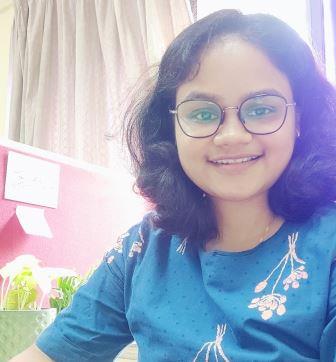
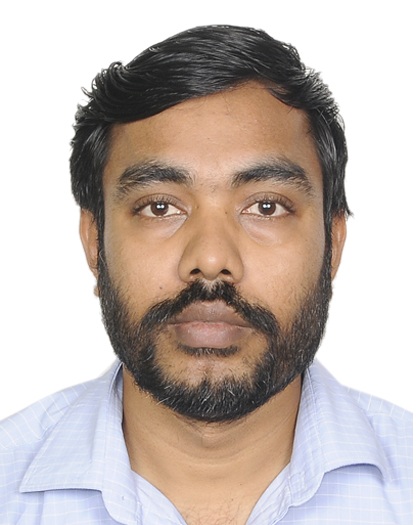
Samayita Banerjee is a Postdoctoral Associate in the Heritage Science and Society Programme at the National Institute of Advanced Studies (NIAS), Bengaluru. Her work at NIAS focuses on the spatial documentation and GIS analysis of cultural heritage landscapes across India as part of the project Towards a National Cultural Landscape Information System, which is developing the KASTURI Portal, India's first curated geospatial heritage platform hosted on ISRO-Bhuvan. Her contributions include landscape mapping, dataset validation, and the development of spatial narratives for understudied archaeological sites. Her broader research specialisation lies in the landscape archaeology and geoarchaeology of South Asia, with a particular focus on human-environment interactions in the deltaic and coastal zones of Bengal and the forested uplands of central India.
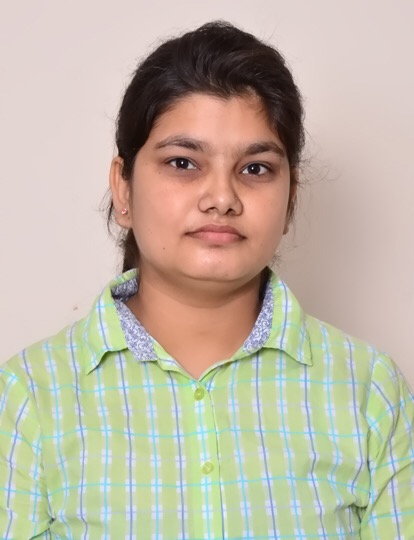
Dr Dipak Mandal is a Post-Doctoral Associate at the National Institute of Advanced Studies (NIAS), Bengaluru. His research focuses on environmental governance, sustainability, and development studies, with particular attention to how socio-ecological systems respond to change in urban and coastal regions. His current work examines climate change, livelihood transitions, and ecosystem dynamics in the Indian Sundarbans. Through field-based research and stakeholder engagement, he explores how environmental vulnerability shapes everyday life, mobility, and adaptation in vulnerable coastal communities.
His doctoral research on urban environmental movements in Bengaluru examined the role of civic engagement in issues such as waste management and the conservation of urban commons. Broadly, his work is driven by an interest in understanding how community-led initiatives can contribute to more sustainable and inclusive forms of environmental governance.
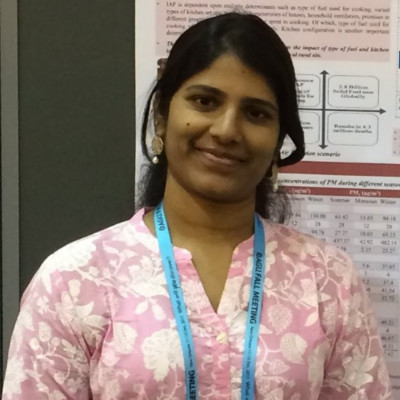
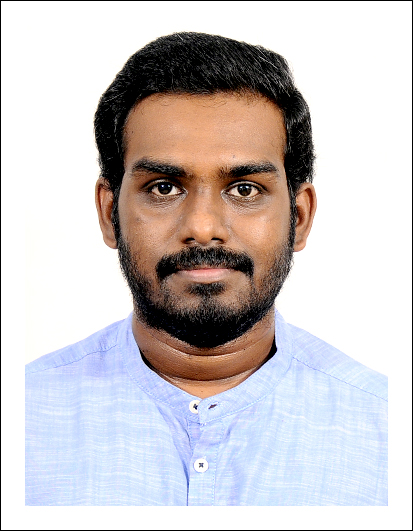
Jithin Jose is an environmental engineer and researcher specialising in air quality assessment, emission inventory development, and particulate matter characterisation. He is currently working as a Postdoctoral Associate at the National Institute of Advanced Studies (NIAS), Bengaluru, where he contributes to research on atmospheric pollution, emission hotspots, and policy-relevant air quality studies.
He completed his Ph.D. in Environmental Engineering from Vellore Institute of Technology (VIT), where his research focused on road dust characterisation, source apportionment, and associated health risks. He also holds an M.Tech in Energy and Environmental Engineering from VIT and a B.Tech in Mechanical Engineering from the University of Kerala.
Jithin has diverse professional experience spanning academia, research, and industry. He has served as a Teaching and Research Associate and Assistant Professor at VIT, and later as a Senior Research Fellow on a Department of Science and Technology-funded project. He has also worked as a Project Manager on large-scale source apportionment and emission inventory projects at IIT Madras, and as Chief Technology Officer at an IIT-Madras-based startup developing air pollution control technologies.
His research expertise includes air pollution monitoring, dispersion modelling, receptor modelling, and health risk assessment, supported by hands-on experience with advanced analytical instruments and modelling tools. He has authored multiple peer-reviewed publications in reputed international journals and has received several awards for best paper presentations at national and international conferences.
Dr. Vani Kulkarni is a researcher at the National Institute of Advanced Studies (NIAS),
Bangalore, working at the interface of behavioural ecology and microbiome science. Her
research examines how animals make foraging decisions in changing environments and how
these behaviours are linked to gut microbial communities.
Using primates as model systems, her work integrates behavioural experiments, ecological
analysis, and microbial genomics to understand how anthropogenic environments reshape diet,
perception, and host–microbiome interactions. Her research aims to address broader questions
on ecological flexibility, adaptation, and the consequences of human-modified landscapes for
animal behaviour and physiology
Dr. Shaik Vazeed Pasha is a Research Scientist at the National Institute of Advanced Studies (NIAS) and Co-Project Lead for the initiative “Develop Natural Resource Utilization Plan for Biodiversity Hotspots.” He also an external Associate professor at The University of Trans-Disciplinary Health Sciences and Technology (TDU), Bengaluru. He holds a Ph.D. in Environmental Sciences from NRSC–ISRO, Hyderabad, in collaboration with Andhra University. With over 11 years of experience, he has contributed to 12+ national-level projects across institutions like ISRO, NIAS, and IIT Kharagpur. As Co-Principal Investigator, he successfully led the IWST-ICFRE Government of India-sponsored project “Study of Climate-Driven Effects on Indian Forests Through Long-Term Monitoring.” His research focuses on spatial biodiversity, natural resource management, biomass and carbon stock estimation, and forest disturbance regimes, supported by 40+ international publications and 954+ citations.
Dr. Pasha has conducted extensive fieldwork across diverse Indian ecosystems, including the Western and Eastern Ghats, Eastern Himalayas, mangroves, and arid zones. He actively mentor’s young researchers, reviews for reputed journals, and has guided over 35 interns in geospatial analytics. He represented India at the 8th BRICS Young Scientist Conclave (2023) and is affiliated with Global Forest Biodiversity Initiative (GFBI) and Science-I, Life member in Indian Society of Geomatics (ISG), and he was an advisory board member in Kerala Agricultural University-2024. His contributions have earned him multiple awards and commendations from ISRO, NIAS, IIT Kharagpur, Karnataka Forest Department, and Digital University of Kerala.