School of Social Sciences

Shekhar Seshadri

Image of the person
Shekhar Seshadri
Designation
Adjunct Professor
Body

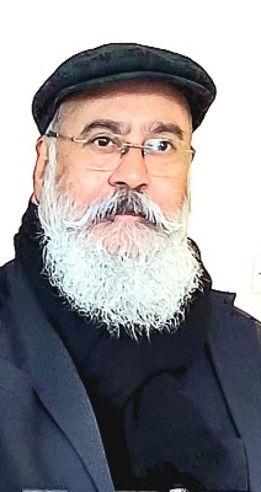
Dr Shekhar Seshadri is a child psychiatrist with over 40 years of experience in the field of child and adolescent mental health. As Former Senior Professor in the Dept. of Child and Adolescent Psychiatry, NIMHANS, his work has extended beyond the clinical population to children and child care institutions/ service providers across the country as well as the South Asia region. Some of his special areas of interest are childhood trauma, gender and sexuality issues and life skills education. He has been part of policy and legal deliberations in these areas. Also, an artist and musician, he uses a number of creative methodologies in child mental health interventions including theatre and developmental approaches. In May 2025, he completed a four-year advisory position in India’s largest public child mental health initiative SAMVAD (Support, Advocacy & Mental health interventions for children in Vulnerable circumstances And Distress - A National Initiative & Integrated Resource for Child Protection, Mental Health, & Psychosocial Care), supported by the Ministry of Women & Child Development, Government of India. Dr.Shekhar is based in Bangalore, India and currently works as Adjunct Professor in the School of Social Sciences, National Institute of Advanced Studies (NIAS). In NIAS he is also Advisor to PRATICRIA, Protection, Response, Advocacy & Transformational Interventions for Children Residing in Adversity - An Initiative for Child Rights, Protection and Mental Health
 

Posting
Department
Search Exclude Entity
No

Sheila Ramaswamy

Image of the person
Sheila
Designation
Adjunct Faculty
Body

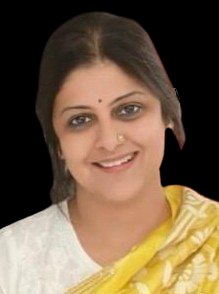
Dr Sheila Ramaswamy currently serves as Adjunct Faculty, Chief Scientist, & Head, PRATICRIA Initiative for Child Rights, Protection & Mental Health at the National Institute of Advanced Studies, Bangalore.

With a background in Medical and Psychiatric Social Work and Public Health, from the Tata Institute of Social Sciences and London School of Hygiene & Tropical Medicine, respectively, Sheila spent several years working in emergency and humanitarian contexts in Asia, Africa and the Middle East on a range of public health issues. She subsequently conceptualized and led a unique a country-wide Initiative for child protection and mental health, SAMVAD, at the National Institute of Mental Health and Neurosciences (NIMHANS), Bangalore, under the aegis of the Ministry of Women & Child Development, Government of India.

She has continued this work since, with her academic and field work focussed on enhancing the interface between vulnerable and at-risk children and the various systems that serve them. In light of this, Sheila’s doctoral research at the Athena Institute of Transdisciplinary Sciences, Vrije University, Netherlands, and her subsequent research and intervention-related work adopts integrated approaches to resolving complex problems in the context of the child protection and mental health, particularly those lying at the intersectionalities of child mental health, law and justice. With wide-ranging interests such as childhood trauma, abuse, adoption, conflict-affected children, and children in conflict with law, Sheila has developed several innovative, rights-based methodologies for supporting and empowering children in adversity, such as protocols for mandatory reporting in child sexual abuse, interventions for supporting child witnesses in the courtroom, assessments for juvenile transfer, and interventions for reconciliation-Informed mental healthcare for conflict-affected children.

A large component of her work involves development and implementation of training and teaching programs using participatory and creative methodologies for engagement with childcare service providers within schools, health facilities and childcare institutions, as well as members of the judiciary.

Posting
Department
Search Exclude Entity
No

Navigating intersectional barriers: Caste, class and gender of dalit women in engineering colleges

Submitted by rajeshkotappa on Thu, 08/06/2026 - 16:31

The access to higher education for Dalits through positive affirmation is an important step to address representation. However, representation of Dalit women in male-dominated disciplines has received little attention. This article seeks to understand the process of social differentiation that affects Dalit women in engineering colleges. Through the lived experience of these women, the article explicates how caste privilege has transformed itself into merit in the modern era.

Urbanization Beyond Dichotomies: Reviewing Urban Processes, Policies and Inequalities in India

Submitted by rajeshkotappa on Wed, 08/05/2026 - 11:42

This review examines the book Urbanisation and Urban Policies in India: Trends, Patterns and Emerging Perspectives by Ram B. Bhagat and Mohammad Izhar Hassan, highlighting its interdisciplinary contribution to understanding India's urban transformation. It explores how the book bridges global urban theory with India's empirical realities, critically engaging with debates on migration, inequality, segregation, and urban governance.

Urbanization Beyond Dichotomies: Reviewing Urban Processes, Policies and Inequalities in India

Submitted by rajeshkotappa on Wed, 08/05/2026 - 11:36

This review examines the book Urbanisation and Urban Policies in India: Trends, Patterns and Emerging Perspectives by Ram B. Bhagat and Mohammad Izhar Hassan, highlighting its interdisciplinary contribution to understanding India's urban transformation. It explores how the book bridges global urban theory with India's empirical realities, critically engaging with debates on migration, inequality, segregation, and urban governance.