
Publications
|
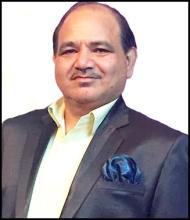
Gufran Beig Source-specific fine particulates emission linked to prevalence of ophthalmic cases in India https://www.nature.com/articles/s41598-024-82914-6 Sahu, S. K., Mishra, A., Mangaraj, P., Yadav, R., Sahu, M. C., Beig, G., ... & Mishra, M. (2025). Source-specific fine particulates emission linked to prevalence of ophthalmic cases in India. Scientific Reports, 15(1), 11183. |

|
Nithin Nagaraj Universal Orbits: Unveiling the Connection between Chaotic Dynamics, Normal Numbers, and Neurochaos Learning. https://dergipark.org.tr/en/pub/chaos/issue/90440/1560943 Henry, A., Nagaraj, N., and Sundaravaradhan, R. (2025). Universal Orbits: Unveiling the Connection between Chaotic Dynamics, Normal Numbers, and Neurochaos Learning. Chaos Theory and Applications, 7(1), 61-69. This study explores the realm of chaotic dynamics, Neurochaos Learning (a brain-inspired machine learning paradigm) and Normal numbers, focusing on the introduction of a novel chaotic trajectory termed the Universal Orbit. The study investigates the characteristics and generation of universal orbits within two prominent chaotic maps: the Decimal Shift Map and the Gauss Map. It explores the set of points capable of forming such orbits, revealing connections with normal numbers and continued fractions. Points within the interval (0, 1) can produce universal orbits under specific conditions, highlighting the intricate relationship between machine learning, chaotic dynamics and number theory. While not all points forming universal orbits are normal numbers, the trajectory of a normal number may represent a universal orbit (under certain conditions). When employing the universal orbit for feature extraction in Neurochaos Learning, the firing time feature can be interpreted by establishing an upper bound and examining its trend. Future research aims to identify sets of points producing universal orbits under various chaotic maps, intending to enhance the performance of algorithms like the Neurochaos Learning algorithm. This study contributes to advancing our understanding of chaotic systems and their applications in artificial intelligence. |

|
Nithin Nagaraj Random Heterogeneous Neurochaos Learning Architecture for Data Classification https://dergipark.org.tr/en/pub/chaos/issue/90440/1578830 Remya, Ajai A S and Nagaraj, Nithin (2025) Random Heterogeneous Neurochaos Learning Architecture for Data Classification. Chaos Theory and Applications, 7 (1). pp. 10-30. Inspired by the human brain's structure and function, Artificial Neural Networks (ANN) were developed for data classification. However, existing Neural Networks, including Deep Neural Networks, do not mimic the brain's rich structure. They lack key features such as randomness and neuron heterogeneity, which are inherently chaotic in their firing behavior. Neurochaos Learning (NL), a chaos-based neural network, recently employed one-dimensional chaotic maps like Generalized Lüroth Series (GLS) and Logistic map as neurons. For the first time, we propose a random heterogeneous extension of NL, where various chaotic neurons are randomly placed in the input layer, mimicking the randomness and heterogeneous nature of human brain networks. We evaluated the performance of the newly proposed Random Heterogeneous Neurochaos Learning (RHNL) architectures combined with traditional Machine Learning (ML) methods. On public datasets, RHNL outperformed both homogeneous NL and fixed heterogeneous NL architectures in nearly all classification tasks. RHNL achieved high F1 scores on the Wine dataset (1.0), Bank Note Authentication dataset (0.99), Breast Cancer Wisconsin dataset (0.99), and Free Spoken Digit Dataset (FSDD) (0.98). These RHNL results are among the best in the literature for these datasets. We investigated RHNL performance on image datasets, where it outperformed stand-alone ML classifiers. In low training sample regimes, RHNL was the best among stand-alone ML. Our architecture bridges the gap between existing ANN architectures and the human brain's chaotic, random, and heterogeneous properties. We foresee the development of several novel learning algorithms centered around Random Heterogeneous Neurochaos Learning in the coming days. |

|
MK Surappa, Gautam R. Desiraju The issue is about the 'quality' of India's publications https://www.thehindu.com/opinion/lead/the-issue-is-about-the-quality-of-indias-publications/article69378556.ece The Hindu |

|
M Sai Baba World Poetry Day https://niascomm.in/2025/03/21/world-poetry-day/ Scicom@NIAS Poetry is as old as language itself. Poetry gives life to the thoughts and resonates with the individual's feelings. World Poetry Day, celebrated annually on March 21st, established by UNESCO in 1999. India has a rich and diverse poetic tradition spanning thousands of years, from ancient Sanskrit poets to modern literary icons. World Poetry Day celebrates individuals with extraordinary talent and the ability to express and put words to the thoughts of many. |

|
Madhusoodan Hosur Unfolding of hen egg-white lysozyme – is there a unique starting point? https://www.tandfonline.com/doi/full/10.1080/07391102.2025.2475230 Hosur, M. (2025). Unfolding of hen egg-white lysozyme – is there a unique starting point? Journal of Biomolecular Structure and Dynamics, 1–8. Folding and unfolding of proteins is a biologically important topic as many neurological diseases involve misfolding of proteins. Here we have used the technique of X-ray crystallography to characterise the early stages of unfolding of the protein lysozyme purified from hen egg-white. The results when compared with our earlier studies reveal, for the first-time, the possibility of protein unfolding to start from a unique point. If true, this would enable engineering of proteins and drugs to prevent neurological disorders. |

|
Rudrodip Majumdar Techno-Economic analysis of solar thermal seasonal thermochemical storage for Indian Himalayan cities https://www.sciencedirect.com/science/article/abs/pii/S1359431125006817 Pujari, A. S., Majumdar, R., Subramaniam, C., & Saha, S. K. (2025). Techno-Economic analysis of solar thermal seasonal thermochemical storage for Indian Himalayan cities. Applied Thermal Engineering, 126090. In this study, a modular radial flow annular reactor using the strontium bromide hexahydrate-monohydrate conversion reaction is designed for long-term energy storage, and performance analysis is conducted for eight cities from the Indian Himalayan Region, each with distinct meteorological characteristics, to evaluate the system’s suitability. The year-long charging and discharging efficiencies are nearly location-independent, with consistent values of ∼35 % and ∼74 %, respectively. The system configuration with direct solar heating capabilities exhibits better overall system efficiency and economic feasibility, with the levelized cost of heating in the range of INR 33–51/kWh. The heating cost is higher than that of conventional electric systems but is competitive with diesel-based heating (>INR 40/kWh). |

|
Gufran Beig The Need for Better Monitoring of Climate Change in the Middle and Upper Atmosphere https://agupubs.onlinelibrary.wiley.com/doi/10.1029/2024AV001465 Anel, J. A., Cnossen, I., Antuna‐Marrero, J. C., Beig, G., Brown, M. K., Doornbos, E., ... & Mlynczak, M. G. (2025). The need for better monitoring of climate change in the middle and upper atmosphere. AGU Advances, 6(2), e2024AV001465. Anthropogenic greenhouse gas emissions significantly impact the middle and upper atmosphere. They cause cooling and thermal shrinking and affect the atmospheric structure. Atmospheric contraction results in changes in key atmospheric features, such as the stratopause height or the peak ionospheric electron density, and also results in reduced thermosphere density. These changes can impact, among others, the lifespan of objects in low Earth orbit, refraction of radio communication and GPS signals, and the peak altitudes of meteoroids entering the Earth's atmosphere. Given this, there is a critical need for observational capabilities to monitor the middle and upper atmosphere. Equally important is the commitment to maintaining and improving long-term, homogeneous data collection. However, capabilities to observe the middle and upper atmosphere are decreasing rather than improving. |