
Publications

|
Rudrodip Majumdar Energy Efficiency and Circularity: Insights from Adoption Trends of Washing Machines, Critical Materials Demand and Responsible Use Strategies https://www.sciencedirect.com/science/article/abs/pii/B9780443289491000011 Pandey, A., and Majumdar, R. (2025). Energy efficiency and circularity: insights from adoption trends of washing machines, critical materials demand, and responsible use strategies. In Energy Efficiency in Critical Times (pp. 3-18). Elsevier. |

|
Gufran Beig Trends of leading pollutant in a highly polluted global city: processes involved https://link.springer.com/article/10.1007/s10661-025-14243-8 Radhadevi, L., Bandaru, M., Yarragunta, Y., Beig, G., Rathod, A., & Singh, S. (2025). Trends of leading pollutant in a highly polluted global city: processes involved. Environmental Monitoring and Assessment, 197(7), 1-18. |
|
Gufran Beig What drives anthropogenic fine particulate chloride emissions in India? – A quantitative assessment of hotspots https://www.sciencedirect.com/science/article/abs/pii/S004896972501589X Sahoo, P., Mishra, A., Mangaraj, P., Ravindra, K., Beig, G., Tyagi, B., & Sahu, S. K. (2025). What drives anthropogenic fine particulate chloride emissions in India?–A quantitative assessment of hotspots. Science of The Total Environment, 991, 179949. Particulate chloride (pCl) is a significant constituent of atmospheric particulate matter, playing a critical role as a key precursor to secondary aerosols via nocturnal heterogeneous reactions. While coarse pCl typically prevails along the coastal belt, however, the growing presence of fine pCl in the interior regions is an emerging air quality concern. Anthropogenic sources driving these emissions remain poorly characterised, particularly in India, where existing global inventories lack resolution and specificity. This study presents the first high-resolution (0.1° × 0.1°) national anthropogenic emission inventory of pCl across India for 2023, identifying 42 discrete sources. Total pCl emissions are estimated at 245.6 Gg/yr, of which biomass burning contributes ~68 % and waste burning ~21 %. Emission hotspots are concentrated in the northern and southern Indo-Gangetic Plain and the Northeastern states, with over 60 % of total emissions originating from just 8 % of the country's area. Despite an estimated uncertainty of ±71 %, this comprehensive dataset offers critical insights for chemical transport modelling and policy formulation, enabling targeted mitigation strategies and advancing understanding of pCl dynamics at the national level. |
|
Rudrodip Majumdar Electricity Cost Sensitivity in Green Hydrogen Production: A Comparative Tariff Analysis Across Select Indian States http://eprints.nias.res.in/2961/ Chhabra, Nishtha and Majumdar, Rudrodip and Ghosh, Tapasi and Subramanyam, T (2025). In: Energy & Carbon Management Conference: Case Studies, Progress & Future Directions (ECM 2025), 13-14 June 2025, IIT Guwahati. |

|
M Sai Baba International Albinism Awareness Day https://niascomm.in/2025/06/13/international-albinism-awareness-day-iaad/ Scicom@NIAS International Albinism Awareness Day is observed on June 13. It is a rare genetic condition that results in little or no production of melanin, the pigment responsible for the colour of the skin, hair, and eyes. Yes, Albinism is hereditary. While a cure is not currently available, research in genetics and gene therapy is ongoing. Discriminating against people for a reason one is not responsible is a wrong that is committed. |

|
Vinay Kumar Dadhwal Geospatial Identification of Human–Wildlife Conflict Hotspots in the Southern Western Ghats https://link.springer.com/article/10.1007/s12524-025-02210-2 Pavithra, G. M., Venkataramana, G. V., Pasha, S. V., Reddy, C. S., Swarada, B., & Dadhwal, V. K. (2025). Geospatial Identification of Human–Wildlife Conflict Hotspots in the Southern Western Ghats. Journal of the Indian Society of Remote Sensing, 1-16. This study analyzed unprecedented 34,596 geo-stamped human-wildlife conflict (HWC) incidents from 2019–2023 in Karnataka’s Southern Western Ghats reveals critical insights into spatio-temporal dynamics. Predominated by human–elephant conflicts (92.1% of incidents, 87.4% of compensation), the data also includes human–carnivore and other conflicts, with elephants, tigers, leopards, wild boars, and gaurs driving 99.6% of cases. By integrating geospatial layers—land use, tree loss (5741 ha over 20 years), elevation (1000–1500 m), roads (53%), and settlements—with advanced tools like spatial grid analysis, clustering, kernel density estimation, and kriging, the study identifies key conflict drivers. The resulting HWC clusters and hotspots offer actionable insights for management, with global applications for similar landscapes. |

|
Shaik Vazeed Pasha Geospatial Identification of Human–Wildlife Conflict Hotspots in the Southern Western Ghats https://link.springer.com/article/10.1007/s12524-025-02210-2 Pavithra, G. M., Venkataramana, G. V., Pasha, S. V., Reddy, C. S., Swarada, B., & Dadhwal, V. K. (2025). Geospatial Identification of Human–Wildlife Conflict Hotspots in the Southern Western Ghats. Journal of the Indian Society of Remote Sensing, 1-16. This study analyzed unprecedented 34,596 geo-stamped human-wildlife conflict (HWC) incidents from 2019–2023 in Karnataka’s Southern Western Ghats reveals critical insights into spatio-temporal dynamics. Predominated by human–elephant conflicts (92.1% of incidents, 87.4% of compensation), the data also includes human–carnivore and other conflicts, with elephants, tigers, leopards, wild boars, and gaurs driving 99.6% of cases. By integrating geospatial layers—land use, tree loss (5741 ha over 20 years), elevation (1000–1500 m), roads (53%), and settlements—with advanced tools like spatial grid analysis, clustering, kernel density estimation, and kriging, the study identifies key conflict drivers. The resulting HWC clusters and hotspots offer actionable insights for management, with global applications for similar landscapes. |
|
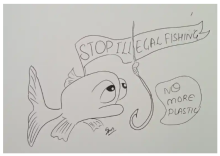
M Sai Baba International Day for the Fight against Illegal, Unreported and Unregulated (IUU) Fishing https://niascomm.in/2025/06/06/international-day-for-the-fight-against-illegal-unreported-and-unregulated-iuu-fishing/ Scicom@NIAS International Day for the Fight Against Illegal, Unreported, and Unregulated Fishing” is observed on June 5 every year. Over the years, technological advances, increasing demand for seafood, and inadequate governance have contributed to a rise in illegal, unreported, and unregulated fishing. This is a reminder to the world that our oceans, their ecosystems, and the livelihoods of millions are under a silent but serious threat. |