
Publications

|
M Sai Baba The International Day of Women in Multilateralism https://niascomm.in/2026/01/25/the-international-day-of-women-in-multilateralism/ SciComm@NIAS Despite women's extensive participation in fields such as global health, education, and social services, significant disparities continue in leadership positions. Representation is necessary, but insufficient. Multilateralism adds the dimension of global influence, collaboration, and institution-building. This observation of "The International Day of Women in Multilateralism" is not merely ceremonial—it is a call to action. |
|
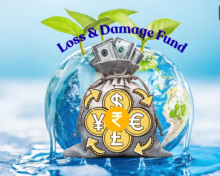
Sanjay Kumar Srivastava India’s Moment to Shape Global Loss and Damage Finance https://www.policyedge.in/p/indias-moment-to-shape-global-loss?utm_campaign=post-expanded-share&utm_medium=web&triedRedirect=true The Policy Edge |

|
C P Rajendran co-authored Mallika Bhanot, School of Natural Sciences and Engineering A dangerous march towards a Himalayan ecocide https://www.thehindu.com/opinion/lead/a-dangerous-march-towards-a-himalayan-ecocide/article70539107.ece The Hindu In the ecologically vulnerable Himalayas, disaster resilience must take precedence over disaster-prone projects and infrastructure |
|
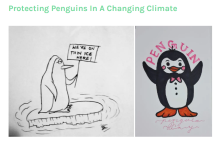
M Sai Baba Penguin Awareness Day https://niascomm.in/2026/01/22/penguin-awareness-day/ SciComm@NIAS Highlights the need for conservation and global action. Nearly two-thirds of Penguin species are in decline, with African penguins listed as critically endangered. Penguins stand as a remarkable example of evolutionary adaptation: they are birds that lost the ability to fly but evolved to "fly" underwater, becoming highly specialised marine predators. Penguins are iconic survivors of Earth's harshest climates, but human-driven changes are pushing many species toward extinction. |

|
Prof Shailesh Nayak Towards the Stewardship of the Third Pole: The Himalaya https://link.springer.com/article/10.1007/s12524-025-02415-5 Nayak, S. Towards the Stewardship of the Third Pole: The Himalaya. J Indian Soc Remote Sens (2026). https://doi.org/10.1007/s12524-025-02415-5 |

|
Sanjay Kumar Srivastava Trust, tech, and resilience: Promises of India’s G-RAM-G https://timesofindia.indiatimes.com/blogs/voices/trust-tech-and-resilience-promises-of-indias-g-ram-g/ Times of India |

|
Sanjay Kumar Srivastava Democratizing AI Resources for Global Resilience and Inclusive Growth (#7 Strategic Recommendations) - Input to India AI Impact Summit 2026 NIAS Blog The India–AI Impact Summit 2026 defines a new global moment — from dialogue to demonstrable impact. Guided by the principles of People, Planet, and Progress, the Working Group on Democratizing AI Resources envisions a world where access to AI is equitable, affordable, and inclusive. This brief presents actionable pathways to make AI a global public good — advancing disaster resilience, climate finance, and sustainable development. Drawing on India’s DBT–Aadhaarand AI-enabled parametric insurance models, it showcases how AI can deliver real-world benefits, empowering communities, protecting the planet, and driving shared progress for all. |

|
Rudrodip Majumdar Integrated Techno-economic Multi-objective Optimization Framework for India’s Green Hydrogen Supply Chain http://eprints.nias.res.in/3040/ Nishtha Chhabra, Rudrodip Majumdar, Tapasi Ghosh, T. Subramanyam (2026). Proceedings of 1st International Conference on Thermo-Fluids and Green Energy Technology (TFGET), 16-18 Jan 2026, Dr B. R. Ambedkar National Institute of Technology, Jalandhar,Punjab |