
Publications
|
Gufran Beig Temporal variation of black carbon and carbon monoxide in the City of Bengaluru, India https://link.springer.com/article/10.1007/s00704-025-05999-7 Dhanya G, Shivkumar M, Pranesha T. S. et al. Temporal variation of black carbon and carbon monoxide in the City of Bengaluru, India. Theor Appl Climatol 157, 75 (2026). https://doi.org/10.1007/s00704-025-05999-7 |
|
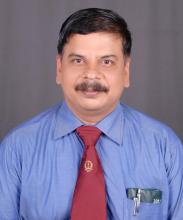
G Parthasarathy Naturally occurring Minerals as Nano-fillers in polymer composite materials https://iiucnn.in/conferences/polymera2026 Parthasarathy, G and Sreekala, MS (2026) In: International Conference on Recent Advances in Emerging Polymeric Materials: Bridging Science and Industry, 8-11 January 2026, Mahatma Gandhi University, Kerala, India. Naturally occuring Minerals that are used as fillers in the polymer industry. The present paper discusses the role of natural minerals as cost-effective, environment-friendly materials that improve the strength of the polymers, and improve their physical and mechanical properties of the polymer matrix. Commonly utilized minerals include calcium carbonate, talc, mica, silica, and phyllosilicates, which can constitute 10% to 60% of the polymer composite
|

|
Rudrodip Majumdar Decoding the CUF-LCOH Nexus: A State-wise Assessment for India's Green Hydrogen Pathway http://eprints.nias.res.in/3041/ Nishtha Chhabra, Rudrodip Majumdar, Tapasi Ghosh, T. Subramanyam (2026). Proceedings of the International Conference on Scientific Advances in Natural and Technological Sciences (SAINTS 2026), 07-09 January 2026, Christ University, Bengaluru. Green hydrogen is progressively being identified as indispensable for decarbonising the dynamic global energy landscape. Since the electricity used to power electrolysers represents the dominant component of green hydrogen production costs, streamlining renewable energy (RE) costs is central to making green hydrogen affordable and accessible. In this context, the Capacity Utilisation Factor (CUF), the ratio of actual output to the maximum possible output at full capacity, serves as a robust metric to evaluate the performance of renewable energy plants in real-time. This study investigates the economic viability of green hydrogen production across select Indian states-Kerala, Tamil Nadu, Gujarat, Karnataka, Rajasthan, Andhra Pradesh, and Odisha-by examining how state-specific solar and wind CUFs influence the overall Levelized Cost of Hydrogen (LCOH). Through a comparative, data-driven approach, the study explores the potential of RE availability and plant performance in sculpting the economics of green hydrogen. Additionally, the study highlights the need for targeted state-specific incentives using differentiated solar and wind tariffs, which could drive down green hydrogen production costs through economies of scale. The study aims to support informed policymaking for India's nascent green hydrogen sector, thereby advancing the goals of India's National Green Hydrogen Mission. |

|
M Sai Baba Dawn of a New Year https://niascomm.in/2026/01/03/dawn-of-a-new-year/ SciComm@NIAS 2026 leaves behind the first 25 years (silver jubilee) of this century. Dawn of the new year ushers in the resolution economy. Come February, the quitter's day sets in. Every day of your life is an opportunity, and you have to make it count. Let us all resolve to welcome the new year with hope, to go beyond exchanging greetings, to find out what matters to you, and to pursue it with passion and commitment. |

|
Rudrodip Majumdar Nondegradable Waste Incursion, Environment and Ecology: A Case of Densely Populated Urban Settings in India. https://link.springer.com/chapter/10.1007/978-3-032-07155-2_10 Majumdar, R. (2026). Nondegradable Waste Incursion, Environment and Ecology: A Case of Densely Populated Urban Settings in India. In: Joshi, P., Mahato, S., Shkaruba, A. (eds) Geospatial Science for Urban Ecosystems. The Urban Book Series. Springer, Cham. |
|
G Parthasarathy Nanocrystalline Cookeite from Lithium Mineral Deposits of Jammu, India: A Multianalytical Characterization https://media.sciltp.com/articles/2512002589/2512002589.pdf Saikia, B. J., Parthasarathy, G., Saikia, B. K., Bordoloi, P., Borah, R. R., Srivastava, P. K., & Satyanarayanan, M. (2025). Nanocrystalline Cookeite from Lithium Mineral Deposits of Jammu... Earth Systems, Resources, and Sustainability, 1(1), 97-109 Saikia, B. J., Parthasarathy, G., Saikia, B. K., Bordoloi, P., Borah, R. R., Srivastava, P. K., & Satyanarayanan, M. (2025). Nanocrystalline Cookeite from Lithium Mineral Deposits of Jammu, India.... Earth Systems, Resources, and Sustainability, 1(1), 97-109. |

|
Sanjay Kumar Srivastava Heat stress: The silent scourge eating into India's food security https://www.newindianexpress.com/opinion/2025/Dec/30/heat-stress-the-silent-scourge-eating-into-indias-food-security The New Indian Express |

|
M Sai Baba International Year of Quantum Science and Technology https://niascomm.in/2025/12/30/international-year-of-quantum-science-and-technology/ SciComm@NIAS Despite women's extensive participation in fields such as global health, education, and social services, significant disparities continue in leadership positions. Representation is necessary, but insufficient. Multilateralism adds the dimension of global influence, collaboration, and institution-building. This observation of "The International Day of Women in Multilateralism" is not merely ceremonial—it is a call to action. |