
Publications

|
V V Binoy Environmental citizen science in India: Objectives, challenges, and impact https://osf.io/preprints/socarxiv/8zhb7_v2 Bharati, Anjali., & Binoy, V. V. (2026). Environmental citizen science in India: Objectives, challenges, and impact. SocArXiv. |

|
Anjali Bharati Environmental citizen science in India: Objectives, challenges, and impact https://osf.io/preprints/socarxiv/8zhb7_v2 Bharati, Anjali., & Binoy, V. V. (2026). Environmental citizen science in India: Objectives, challenges, and impact. SocArXiv. |
|
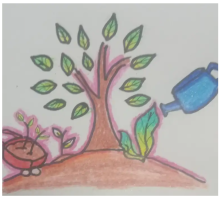
M Sai Baba Nature Restoration Day https://niascomm.in/2026/06/05/nature-restoration-day/ SciComm@NIAS A specialised observance focusing on ecosystem restoration, soil health, and biodiversity revival. Global soil fertility maps show that large regions of the world are experiencing declines in organic matter and nutrient levels. We should all remember and revere the soil and contribute to its health. By combining modern science with traditional wisdom, communities across the world are proving that local action can drive global change. |

|
G Parthasarathy End of the ‘Journal of Geology’ (1893-2026) and Implicit Lessons for Society’s and University Journals https://pubs.geoscienceworld.org/geosocindia/jour-geosocindia/article/102/6/733/731180/End-of-the-Journal-of-Geology-1893-2026-and Krishnamurthy, P., & Parthasarathy, G. (2026). End of the ‘Journal of Geology’ (1893-2026) and implicit lessons for society’s and university journals. Journal of the Geological Society of India, 102(6), 733-734. |

|
M Sai Baba World Parrot Day https://niascomm.in/2026/05/31/world-parrot-day/ SciComm@NIAS |

|
Sanjay Kumar Srivastava AI for a climate-resilient India https://cms.nias.res.in/sites/default/filesefs/2026-06/AI_for_a_climate-resilient_India-May2026.pdf Srivastava, Sanjay Kumar. (2026, May). AI for a climate-resilient India. Surakshit Sansar. 52-56. AI enables an intelligence architecture that links the observation, cognition, and decision layers, leading to anticipatory governance. The greatest contribution of AI lies not in accelerating disaster response but in enabling earlier interventions that prevent losses before hazards translate into disasters. |
|
Sindhu Radhakrishna Voices from the forest: Pangolin conservation through local ecological knowledge and community values http://eprints.nias.res.in/3393/ Konwar, Abhijit., & Radhakrishna, Sindhu. (2026). Voices from the forest: Pangolin conservation through local ecological knowledge and community values (NIAS/NSE/ABC/R/PB/07/2026 - Policy Brief). NIAS. |
|
Abhijit Konwar Voices from the forest: Pangolin conservation through local ecological knowledge and community values http://eprints.nias.res.in/3393/ Konwar, Abhijit., & Radhakrishna, Sindhu. (2026). Voices from the forest: Pangolin conservation through local ecological knowledge and community values (NIAS/NSE/ABC/R/PB/07/2026 - Policy Brief). NIAS. |