
Publications

|
M Sai Baba National Mountain Climbing Day https://niascomm.in/2026/08/01/national-mountain-climbing-day/ SciComm@NIAS Celebrating the thrill of climbing mountains and recognising the courage, determination, and perseverance of mountaineers. Climbing mountains offers many lessons. To be a successful climber, one requires planning, discipline, teamwork, courage, and humility. These values resonate in everyday life. |
|
S Anbazhagan Alkaline–Carbonatite complexes of India: A review of geological evolution and critical mineral resources https://rsisinternational.org/journals/ijrsi/view/alkaline-carbonatite-complexes-of-india-a-review-of-geological-evolution-and-critical-mineral-resou… Ranjitkumar, R., & Anbazhagan, S. (2026). Alkaline–Carbonatite complexes of India: A review of geological evolution and critical mineral resources. International Journal of Research and Scientific Innovation 13(7).1039- 1054. |

|
Sanjay Kumar Srivastava From prediction to protection: AI’s quiet revolution in disaster resilience https://cms.nias.res.in/sites/default/filesefs/2026-08/From%20Prediction%20to%20Protection%20-%20Surakshit%20Sansar%20JULY%202026.pdf Srivastava, Sanjay Kumar. (2026, July). From prediction to protection: AI’s quiet revolution in disaster resilience. Surakshit Sansar. pp. 28-33. |
|
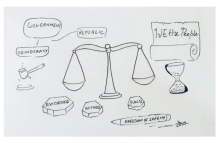
M Sai Baba International Day for Judicial Well-being https://niascomm.in/2026/07/25/international-day-for-judicial-well-being/ SciComm@NIAS Dharma (righteousness) protects those who protect it. In modern times, it is the judges and judiciary that ensure that Dharma is protected and justice delivered. Several unique aspects of judicial work contribute to the pressures. As legal systems become more complex and societal expectations continue to grow, attention to judicial well-being will become increasingly important. |

|
Biju Dharmapalan A letter with intent https://epaper.telegraphindia.com/calcutta-edition/29/2026-07-25/page-12.html Dharmapalan, Biju. (2026, July 25). A letter with intent. The Telegraph. |
|
Biju Dharmapalan Akashvani: Connecting millions, humanely https://www.easternmirrornagaland.com/akashvani-connecting-millions-humanely Dharmapalan, Biju. (2026, July 24). Akashvani: Connecting millions, humanely. Eastern Mirror. |
|
Sanjay Kumar Srivastava Poverty, floods, and resilience transitions in North Bihar https://cms.nias.res.in/sites/default/filesefs/2026-07/Poverty%2C%20floods%2C%20and%20resilience%20transitions%20in%20North%20Bihar.pdf Srivastava, Sanjay Kumar. (2026). Poverty, floods, and resilience transitions in North Bihar. Indian Journal of Social Studies and Humanities 13(3). 76-80. |

|
Biju Dharmapalan Vikram-1: The launch that signals India's space renaissance https://risingkashmir.com/viewpoint/vikram-1-the-launch-that-signals-indias-space-renaissance-12177435 Dharmapalan, Biju. (2026, July 18). Vikram-1: The launch that signals India's space renaissance. Rising Kasmir. |