
Publications
|
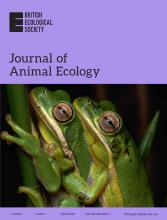
Anindya Sinha MacaqueNet: Advancing comparative behavioural research through large-scale collaboration https://besjournals.onlinelibrary.wiley.com/doi/full/10.1111/1365-2656.14223 Sinha, Anindya and Chatterjee, .Mayukh and Dhawale, Ashni Kumar and et al, . (2025) MacaqueNet: Advancing comparative behavioural research through large-scale collaboration. Journal of Animal Ecology. There is a vast and ever-accumulating amount of behavioural data on individually recognised animals, an incredible resource to shed light on the ecological and evolutionary drivers of variation in animal behaviour. Yet, the full potential of such data lies in comparative research across taxa with distinct life histories and ecologies. In this multi-author paper, we introduce MacaqueNet, a global collaboration of over 100 researchers (https://macaquenet.github.io/) aimed at unlocking the wealth of cross-species data for research on macaque social behaviour. |
|
Gufran Beig Air pollution crisis in Indian metros, urgent call for electrification https://www.hindustantimes.com/ht-insight/climate-change/air-pollution-crisis-in-indian-metros-urgent-call-for-electrification-101738916057623.html Hindustan Times |
|
Tejal Kanitkar Enhancing inclusiveness and sustainability: impact of accessibility and affordability on public transportation in an Indian megacity https://www.tandfonline.com/doi/full/10.1080/29941849.2025.2449830 Ghosh, T., Kanitkar, T., and Srikanth, R. (2025). Enhancing inclusiveness and sustainability: impact of accessibility and affordability on public transportation in an Indian megacity. Sustainable Transport and Livability, 2(1), 1-31. |
|
Tanmay Ghosh Enhancing inclusiveness and sustainability: impact of accessibility and affordability on public transportation in an Indian megacity https://www.tandfonline.com/doi/full/10.1080/29941849.2025.2449830 Ghosh, T., Kanitkar, T., and Srikanth, R. (2025). Enhancing inclusiveness and sustainability: impact of accessibility and affordability on public transportation in an Indian megacity. Sustainable Transport and Livability, 2(1), 1-31. |
|
Anindya Sinha Professor, Animal Behaviour and Cognition Programme Saving Wildlife in a Changing India https://www.epw.in/journal/2025/2/review-environment-and-development/saving-wildlife-changing-india.html Economic and Political Weekly, Volume 60, No 2, Pages 33-39 How can India balance economic ambitions, ecological integrity, and social justice? This paper seeks to unpack systemic threats to wildlife conservation, including weakened laws, a governance favouring economics over ecology, and a growing disconnect between policy and on-ground action. It critiques exclusionary policies and a growing commodification of nature, advocating for a pluriverse of inclusive, landscape-scale conservation approaches that integrate ecological resilience with community leadership. |
|
Tejal Kanitkar Energy requirements for sustainable human development https://www.sciencedirect.com/science/article/abs/pii/S0973082624002746 Ranjan, A., and Kanitkar, T. (2025). Energy requirements for sustainable human development. Energy for Sustainable Development, 85, 101648. In this paper, we explore the relationship between sustainable energy consumption and human well-being. We estimate energy sufficiency levels for achieving Equitable Development Levels (EDL) using the quadratic plateau (QP) model for fourteen development variables related to health, education, and infrastructure for the period between 1990 and 2017. Our results show that the energy threshold necessary for securing key developmental targets is 70 GJ person−1 year−1. Even after accounting for the changing energy-development relationship due to improvements in technology, efficiency, scales of production etc., we find that primary energy supply for meeting developmental needs is likely to be in the range of 75 to100 GJ person−1 year−1, in 2050. Our analysis shows that estimates of “decent living standards” in the existing literature, are highly inadequate and do not address the developmental needs and aspirations of the global South. |
|
Gufran Beig Why Delhi needs to shift to EVs https://indianexpress.com/article/opinion/columns/why-delhi-needs-to-shift-to-evs-9758866/ Indian Express |
|
R Srikanth Research Report on Technology Assessment of Select Small and Modular Reactors (SMRs) to Achieve Net Zero with Energy Security in India (NIAS/NSE/EECP/R/RR/14/2024) http://eprints.nias.res.in/2836/ Majumdar, Rudrodip and Yadav, Raja Ram Singh and Krishnan, AV and Srikanth, R (2024) Research Report on Technology Assessment of Select Small and Modular Reactors (SMRs) to Achieve Net Zero with Energy Security in India. Report. NIAS, Bengaluru. |