
Publications
|
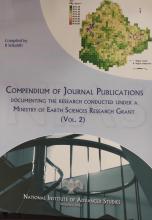
R Srikanth Compendium of journal publications: Documenting the research conducted under a Ministry of Earth Sciences Research Grant (Vol. 2) http://eprints.nias.res.in/3460/ Srikanth, R. (2026). Compendium of journal publications: Documenting the research conducted under a Ministry of Earth Sciences Research Grant (Vol. 2) (NIAS/NSE/EECP/U/RR/03/2026 – Research Report). NIAS. |
|
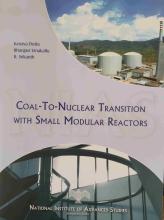
R Srikanth Coal-to-nuclear transition with small modular reactors http://eprints.nias.res.in/3455/ Dutta, Kanaya., Vinakallu, Bhargavi., & Srikanth, R. (2026). Coal-to-nuclear transition with small modular reactors (NIAS/NSE/EECP/R/RR/01/2026 – Research Report). NIAS. |
|
V S Ramamurthy Separated by space and time, united by grief -the tragedy of being a lake https://scienceandculture-isna.org/uploads/latestIssue/1786606051_03_D_K_Srivastava.pdf Srivastava, D. K. & Ramamurthy, V. S. (2026). Separated by space and time, united by grief -the tragedy of being a lake. Science and Culture 92(7-8). 497-505. Blurb: The paper examines the disappearance of Tulare Lake (California) and the Aral Sea (Central Asia) - where river diversions for irrigation destroyed millennia-old lakeshore societies - as emblematic cases of global lake desiccation due to over-exploitation, silting, and waste dumping. It is pointed out that lakes, ponds, and other waterbodies would play an increasingly important role in recharging underground aquifers and offering a relief on a planet under stress due to climate change. |
|
Dinesh Kumar Srivastava Separated by space and time, united by grief -the tragedy of being a lake https://scienceandculture-isna.org/uploads/latestIssue/1786606051_03_D_K_Srivastava.pdf Srivastava, D. K. & Ramamurthy, V. S. (2026). Separated by space and time, united by grief -the tragedy of being a lake. Science and Culture 92(7-8). 497-505 Blurb: The paper examines the disappearance of Tulare Lake (California) and the Aral Sea (Central Asia) - where river diversions for irrigation destroyed millennia-old lakeshore societies - as emblematic cases of global lake desiccation due to over-exploitation, silting, and waste dumping. It is pointed out that lakes, ponds, and other waterbodies would play an increasingly important role in recharging underground aquifers and offering a relief on a planet under stress due to climate change. |
|
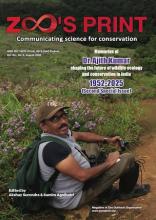
Anindya Sinha Hail to thee, blithe spirit! To our very own skylark: Ajith Kumar, in memoriam https://zoosprint.org/index.php/zp/article/view/8207 Krishnaswamy, J., & Sinha, Anindya. (2026). Hail to thee, blithe spirit! To our very own skylark: Ajith Kumar, in memoriam. Zoo’s Print 41(8). 42-45. |
|
Biju Dharmapalan Synthetic lab-grown humans https://www.thestatesman.com/supplements/science_supplements/synthetic-lab-grown-humans-1503628913.html Dharmapalan, Biju. (2026, August 20). Synthetic lab-grown humans. The Statesman. |
|
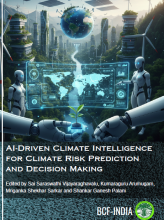
Vinay Kumar Dadhwal Tracking vegetation dynamics after a glacial lake outburst flood (GLOF): A multi-source data analysis from Sikkim Himalaya https://cms.nias.res.in/sites/default/filesefs/2026-08/Tracking-vegetation-dynamics-after.pdf Pasha, S. V., Vasu, L., Swarada., & Dadhwall,Vinay Kumar. (2026). In S. S. Vijayaraghavalu et al. (Eds.), AI-Driven climate intelligence for climate risk prediction and decision making. Biodiversity Conservation Foundation (BCF-India). |
|
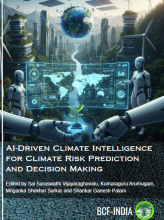
Shaik Vazeed Pasha Tracking vegetation dynamics after a glacial lake outburst flood (GLOF): A multi-source data analysis from Sikkim Himalaya https://cms.nias.res.in/sites/default/filesefs/2026-08/Tracking-vegetation-dynamics-after.pdf Pasha, S. V., Vasu, L., Swarada., & Dadhwall,Vinay Kumar. (2026). In S. S. Vijayaraghavalu et al. (Eds.), AI-Driven climate intelligence for climate risk prediction and decision making. Biodiversity Conservation Foundation (BCF-India). |