
Publications

|
Rudrodip Majumdar co-authored Sub-segment-based approach for assessing growth and energy transition trajectories of Indian two-wheelers https://www.sciencedirect.com/science/article/abs/pii/S0959652623037174 Co-Authored with Kumar Saurabh. Journal of Cleaner Production 430: 139559. 2023 The transition trajectory of India's two-wheeler (2W) vehicle segment is studied using a sequential modelling framework for projecting sub-segment-wise 2W fleet, energy demand, and associated CO2 emissions. Road density per capita was identified as a more significant explanatory variable than GDP per capita in estimating 2W fleet size in India. The elasticity method was used to evaluate the 2W vehicle saturation level based on five different indirect parameters. It was found that population density had the highest impact (48%), followed by urbanization (31%) and adult population share (16%). The impact of the total cost of ownership was negligible. The mean 2W vehicle saturation level was calculated to be 314 while the ownership was found to be 207, 265, and 297 vehicles per 1000 people by 2030, 2040, and 2050, respectively. Scooters were found to be leading the e-transition of 2Ws but a successful e-transition of India's 2Ws would not be achieved without transitioning the motorcycles. Two motorcycle clusters were identified that offer economies of scale towards e-transitioning. Closer scrutiny of six plausible e-transition scenarios showed that a 50% penetration of E−2Ws is unattainable before 2045. The biggest obstacle in achieving high E−2W penetration in India would be the limited capacity to supply indigenously produced vehicles. A high import dependence on battery technology and critical raw materials would limit the energy transition and diversification of the Indian road transport sector. India should follow the mass adoption-driven diffusion pathway in the short-to-medium term and the affordability-constraint diffusion pathway in the long term to achieve the best results in terms of reduction in energy demand and associated emissions for the 2W segment. The gains from the e-transition of the road transport sector would not be substantial without a simultaneous transition in the country's electricity generation mix away from coal-based thermal power. |

|
Tejal Kanitkar, Joan Shilpa Kiran Associate Professor, School of Natural Sciences and Engineering Global and National Considerations for “Just Energy Transitions” https://papers.ssrn.com/sol3/papers.cfm?abstract_id=4621640 Kiran, J. S., & Kanitkar, T. Global and National Considerations for “Just Energy Transitions”. Available at SSRN 4621640. |

|
Tejal Kanitkar, Jayaraman, T Associate Professor, School of Natural Sciences and Engineering Global climate targets: Peaking, emissions reduction and renewable energy Jayaraman, T., & Kanitkar, T. (2023). Global climate targets: Peaking, emissions reduction and renewable energy (TWN Briefing Paper). Third World Network Berhad (198701004592 (163262-P)), 1-11. |

|
Rudrodip Majumdar Annular vertical cylindrical thermochemical storage system with innovative flow arrangements for improved heat dispatch towards space heating requirements https://www.sciencedirect.com/science/article/pii/S0960148123010832?dgcid=author Co-Authored with Ankush Shankar Pujari, Sandip K. Saha, Chandramouli Subramaniam. Renewable Energy 127: 119168. This study evaluates the performance of the vertical cylindrical annular reactor configuration, considering innovative radial airflow configurations. From a detailed parametric study, the most suitable reactor geometry and flow arrangement have been identified based on standard performance metrics. |
|
Madhusoodan Hosur Molecular modelling reveals how abundance of α4 sub-type in synaptic GABARA receptor can lead to refractoriness toward GABA and BZ-type drugs https://www.tandfonline.com/doi/full/10.1080/07391102.2023.2277858 Co-Authored with Tanusree Chaudhuri. Journal of Biomolecular Structure and Dynamics 2023 This work suggests a mechanism for development of drug resistance in epilepsy patients, when the post-synaptic neurons express non-standard ALPHA4 proteins in the synaptic GABARA receptor. The structural details can be useful in developing drugs effective against resistant epilepsy. |
|
C P Rajendran Comments on Kumar et al. (2023), Evidence of Strain Accumulation and Coupling Variation in the Himachal Region of NW Himalaya From Short Term Geodetic Measurements. Tectonics https://doi.org/10.1029/2022TC007690. https://essopenarchive.org/users/697159/articles/685422-comments-on-kumar-et-al-2023-evidence-of-strain-accumulation-and-coupling-variation-in-the-hi… Co-Authored with Tejpal Singh. ESS Open Archive This communication contains comments on the paper by Kumar et al. 2023 published in Tectonics |

|
Rudrodip Majumdar Assessing End-of-Life Room Air Conditioner Recycling Potential for Sustainable Resource Utilization in India: A Case Study for Reducing Environmental Burden https://link.springer.com/chapter/10.1007/978-3-031-41013-0_3 Co Authored with Arpita Pandey. Springer Edited Volume entitled "Anthropogenic Environmental Hazards: Compensation and Mitigation"; Pankaj Pathak, Rajiv Ranjan Srivastava, Sadia Ilyas (Eds.) The escalated demand for rare earth materials is anticipated as a major roadblock to the aspirational ‘green and energy-efficient transition’ since it could lead to raw material shortage. Therefore, recycling essential components from the air conditioner units is envisaged as a suitable solution for sustaining the product supply chain. |
|
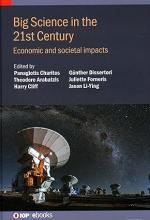
Dinesh Kumar Srivastava India’s Road to HEP Co Authored with V S Ramamurthy. In: “Big Science in the 21st Century: Economic and Societal Impacts”, eds P Charitos, T Arabatzis, H Cliff, G Dissertori, J Forneris, and L Li-Ying, 2023 We discuss here India’s participation in CERN activities in the field of experimental high energy and particle physics and in the creation of new facilities including the Large Hadron Collider. This participation has not only opened new opportunities for young researchers from India but has also become a model for several other international collaborations in which India is taking part. |