
Publications
|
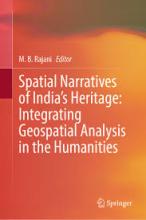
M B Rajani Spatial Narratives of India's Heritage: Integrating Geospatial Analysis in the Humanities https://link.springer.com/book/10.1007/978-981-95-0117-5 Rajani M.B. ed. (2026). Spatial Narratives of India's Heritage: Integrating Geospatial Analysis in the Humanities. Singapore: Springer. ISBN 978-981-95-0116-8 This volume offers fresh perspectives on the use of geospatial analysis in cultural heritage and the humanities. By integrating spatial data and analytical techniques, it demonstrates how digital tools can enrich historical inquiry, spatial storytelling, and interdisciplinary research. Featuring a unique collection of case studies from across India, the book highlights innovative applications of geospatial technology in understanding and preserving the country’s diverse heritage. Through real-world examples spanning regions and time periods, it showcases the transformative potential of geospatial methods in heritage research. An essential resource for scholars of Indian history, archaeology, and heritage studies, the volume also serves as an inspiration for future work in the digital humanities globally. |
|
Prabhakar Sangurmath Critical minerals: Navigating challenges and unlocking opportunities for a sustainable future. Radhika, K. N., & Sangurmath, Prabhakar. (2025). Critical minerals: Navigating challenges and unlocking opportunities for a sustainable future. Vaisheshika, KAAS, 1(4), 27-28. |
|
Pushya A Gautama What’s traditional about traditional medicine? Contemporary notions of “tradition” and “modernity” among vaidya-s of rural Bengaluru https://www.tandfonline.com/doi/full/10.1080/1683478X.2025.2596489#d1e145 Gautama, P. A. (2025). What’s traditional about traditional medicine? Contemporary notions of “tradition” and “modernity” among vaidya-s of rural Bengaluru. Asian Anthropology, 1–18. |

|
Srikumar M Menon Sentinels of our prehistoric past https://www.deccanherald.com/specials/sentinels-of-our-prehistoric-past-3818864 Deccan Herald |

|
M B Rajani A Shifting River, Shifting Narratives: The Sacred Landscape of Mahabodhi https://www.tandfonline.com/doi/full/10.1080/02666030.2025.2593722?utm_source=researchgate.net&utm_medium=article Rajani, M. B., & Datta, S. (2025). A Shifting River, Shifting Narratives: The Sacred Landscape of Mahābodhi. South Asian Studies, 1-39. Bodh Gaya, where the Buddha attained enlightenment, was a major Buddhist sacred site for nearly two thousand years. This paper argues that its sacred landscape was far larger than the three commonly excavated sites. Drawing on historical, archaeological, and geospatial evidence, it identifies 40 features showing that Mahābodhi extended in all directions from the Mahabodhi Temple. The study also suggests that the Lilajan’s present course, about 250 metres east of the temple, differs from the historical Nirañjanā, which lay roughly 1.5 kilometres further east. This later shift in the river cut through and divided the site, reshaping how the sacred landscape is understood and pointing to new directions for future research. |
|
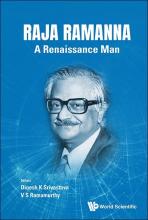
M B Rajani My Brief Interactions About the Book The Structure of Music in Raga and Western Systems by Raja Ramanna https://www.worldscientific.com/doi/10.1142/9789819814435_0025 Rajani, M. B. (2025). My brief interactions about the book ‘The structure of music in raga and western systems’ by Raja Ramanna. In D. K. Srivastava and V. S. Ramamurthy (Eds.). Raja Ramanna: A renaissance man. World Scientific Publishing Co. https://doi It is an immense honour and privilege to be part of this volume that is being brought out in memory of Dr. Raja Ramanna on his birth centenary. Though I am relatively young compared to the active years of Dr. Ramanna’s illustrious career, I am proud that my time at the National Institute of Advanced Studies (NIAS) overlapped with the last six months of his time here. I vividly recall several occasions when we met during those six months. One particular memory that stands out is from April 2004, when I gave my first Wednesday Talk at NIAS on my master’s research, Dr. Ramanna attended the talk, and afterwards, he spoke to me personally about the talk. I remember how he would go to the dining hall early, around 12:30, and I would time my arrival to catch a moment to greet him. On the third day of doing this, he chuckled and remarked, “It amazes me how young people can feel hungry so soon!”… |

|
Shivanand Kanavi We Have To Blame Ourselves, Not Macaulay https://www.rediff.com/news/interview/we-have-to-blame-ourselves-not-macaulay/20251127.htm Rediff News |
|
LM Patnaik Beauty aids: can AI improve human behaviours with imperfect data? https://www.inderscienceonline.com/doi/abs/10.1504/IJDS.2025.149851 Wang, Wen-Feng., Xu, Bai-Zhou., Fuqing Li, Bin Hu., Patnaik, Lalit Mohan., Cui, Lu-Jie., & Pan, Yun-Zhu. (2025). Beauty aids: Can AI improve human behaviours with imperfect data?. International Journal of Data Science, 10(2). 119-135. |