School of Humanities

The School of Humanities is engaged in research in the broad areas of philosophy, psychology, literature, fine arts, and culture. Research in the School currently focuses on philosophical foundations of sciences; cognitive sciences; scientific and philosophical studies of consciousness; Indian psychology and philosophy; history and philosophy of biology; archaeometalurgy and analysis of ancient metals; and translations of literary classics in Kannada into English.

Application of Geospatial Technology in Analyzing Srirangapatna Fort’s Structural Remains

Submitted by super admin (not verified) on Tue, 02/03/2026 - 14:09

This chapter examines the structural remains of Srirangapatna Fort using geospatial technologies, comparing its condition from 1800 to 2021. By generating and georeferencing a high-resolution orthophoto derived from Major General Ross’s 1800 to-scale tabletop model, and integrating satellite imagery with field-based Ground Control Points, the study employs QGIS to identify, digitize, and map fort features. The analysis documents morphological changes resulting from historical events, particularly the Fourth Anglo-Mysore War and the 1799 siege.
Kutch: A Land “Without a Counterpart on the Globe”—A Perception from History

Submitted by super admin (not verified) on Tue, 02/03/2026 - 12:47

Kutch, in western India, is a unique region described by Burnes and Dossal as “a land Without a Counterpart on the Globe” and is referenced in ancient texts and cartographic records. Continuously inhabited since the Palaeolithic period, including a large number of Harappan civilisation settlements, it holds significant archaeological, historical, and maritime importance.

Spatial Narratives of India's Heritage: Integrating Geospatial Analysis in the Humanities

Submitted by super admin (not verified) on Fri, 01/30/2026 - 09:58

This volume offers fresh perspectives on the use of geospatial analysis in cultural heritage and the humanities. By integrating spatial data and analytical techniques, it demonstrates how digital tools can enrich historical inquiry, spatial storytelling, and interdisciplinary research. Featuring a unique collection of case studies from across India, the book highlights innovative applications of geospatial technology in understanding and preserving the country’s diverse heritage.

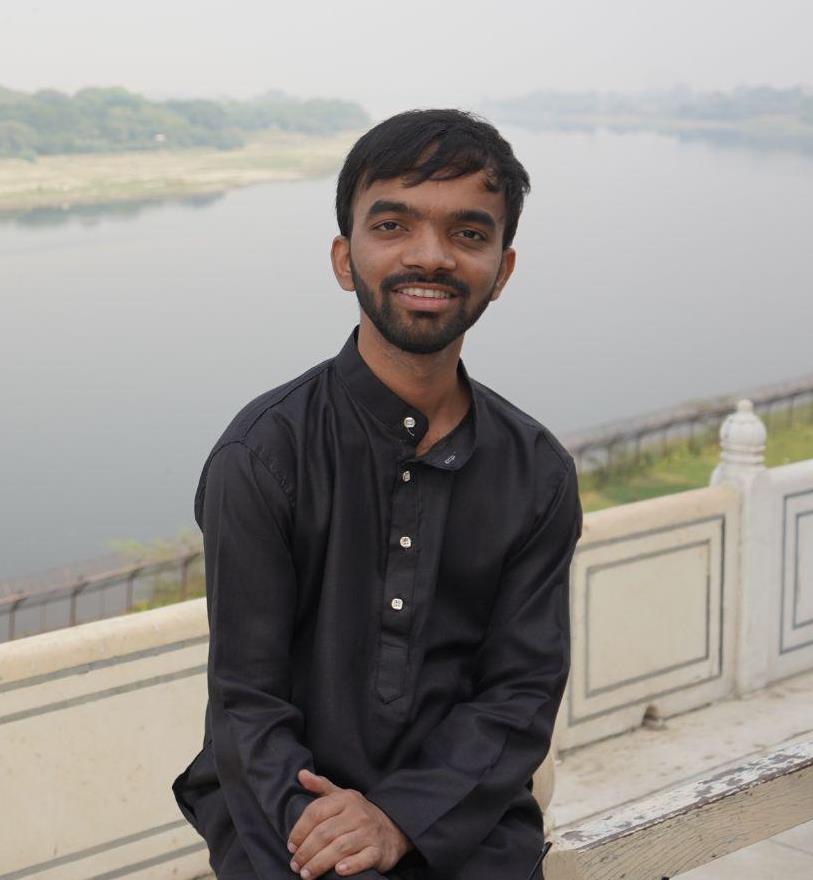
Prasanna Khanvilkar

Image of the person
nias
Designation
Doctoral Student
Body

Mr. Prasanna Khanvilkar is a doctoral student in the School of Humanities at the National Institute of Advanced Studies (NIAS), conducting research on donative patronage during the early historical Western Deccan. He holds a Master's degree in Ancient Indian Heritage Culture & Archaeology from Deccan College Post-Graduate Research Institute, Pune. His professional experience includes serving as a Research Assistant in the Department of Palaeography, Epigraphy & Numismatics at the Indian Institute of Heritage, Noida (Formerly National Museum Institute), and working as a research intern on the Government of India's Department of Science and Technology project on "Scientific Investigation, Digital Documentation and Conservation of Petroglyphs of Konkan."

His research interests include Ancient Indian History and Culture, ancient and medieval Indian scripts, and environmental archaeology.

E-mail
prasanna.khanvilkar@nias.res.in
Posting
Department
Doctoral and Other Programmes
Batch
2025
Search Exclude Entity
No

A Shifting River, Shifting Narratives: The Sacred Landscape of Mahabodhi

Submitted by super admin (not verified) on Tue, 12/16/2025 - 12:21

Bodh Gaya, where the Buddha attained enlightenment, was a major Buddhist sacred site for nearly two thousand years. This paper argues that its sacred landscape was far larger than the three commonly excavated sites. Drawing on historical, archaeological, and geospatial evidence, it identifies 40 features showing that Mahābodhi extended in all directions from the Mahabodhi Temple. The study also suggests that the Lilajan’s present course, about 250 metres east of the temple, differs from the historical Nirañjanā, which lay roughly 1.5 kilometres further east.