
Publications

|
Gufran Beig, R Srikanth, Shailesh Nayak Air Quality, National Standards and Human Health in India http://eprints.nias.res.in/2367/ Beig, Gufran and Srikanth, R and Nayak, Shailesh (2021) Air Quality, National Standards and Human Health in India (NIAS Policy Brief No. NIAS/NSE/EEC/U/PB/25/2021). Policy Brief. NIAS, Bangalore. The World Health Organization (WHO) recently (Sep 2021) released its revised Air Quality Guidelines (AQGs) which have been made more stringent compared to their earlier guidelines. This raises the question whether India’s National Ambient Air Quality Standards (NAAQS) notified by the MoEFCC in 2009 are adequate and whether the revised WHO AQGs are relevant for India. The natural corollary to this is to identify the policies and actions required to strengthen the science of risk assessment and develop rational estimates of mortality and morbidity attributed to air pollution amongst the population in India. These issues have been examined in the NIAS Policy Brief to recommend the way forward. |

|
R Srikanth Executive Summary of the DST – NIAS Stakeholder Consultation workshop to discuss the NIAS Transition Plan for an Integrated Approach to Development and Environment in the Power Sector, DST – NIAS Virtual Workshop January 23, 2021 NIAS Workshop Report No. NIAS/NSE/EEP/U/WR/03/2021 |
|
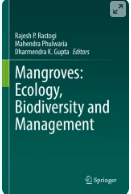
Vinay Kumar Dadhwal Geospatial Tools for Mapping and Monitoring Coastal Mangroves https://link.springer.com/chapter/10.1007/978-981-16-2494-0_21 Co-authored with L Gnanappazham, Kumar Arun Prasad, In: Mangroves: Ecology, Biodiversity and Management, pp. 475-551 |

|
R Srikanth co-authored Professor, Energy, Environment and Climate Change Programme A clean energy transition plan for India https://www.thehindu.com/opinion/op-ed/a-clean-energy-transition-plan-for-india/article37131191.ece Co -authored with A.V .Krishnan The Hindu |
|
C P Rajendran Adjunct Professor, School of Natural Sciences and Engineering Protecting India's natural laboratories https://www.thehindu.com/opinion/op-ed/protecting-indias-natural-laboratories/article36951846.ece The Hindu, 12 October 2021 The need to protect the geological heritage by introducing legislation |
|
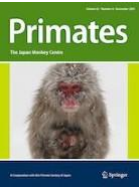
Sindhu Radhakrishna co-authored Professor and Head, Animal Behaviour and Cognition Programme Why do people visit primate tourism sites? Investigating macaque tourism in Japan and Indonesia https://link.springer.com/article/10.1007/s10329-021-00951-5 Primates, October 2021 This study presented two case studies—the Jigokudani Monkey Park, Japan, and the Telaga Warna Nature Recreational Park, Indonesia—where the authors provided quantitative assessments of people’s motivations for visiting managed (monkey parks) and unmanaged (incidental) monkey tourism sites. They further showed that management regimes, socio-demographic attributes, previous experience of interactions with macaques, and feeding them play a role in people’s desire to visit macaque tourism sites. |

|
Rudrodip Majumdar Scaling-up Nature-Based Solutions for Mainstreaming Resilience in Indian Cities https://link.springer.com/chapter/10.1007/978-981-16-4815-1_12 Dhyani, S., Majumdar, R., & Santhanam, H. (2021). Scaling-up nature-based solutions for mainstreaming resilience in Indian cities. Ecosystem-Based Disaster and Climate Resilience: Integration of Blue-Green Infrastructure in Sustainable Development,279-306 |
|
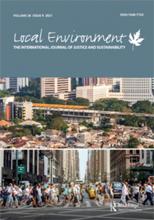
Harini Santhanam, Sudip Kumar Kundu Harini Santhanam is Assistant Professor; Sudip Kumar Kundu is PhD Scholar, Energy, Environment and Climate Change Programme A report on the impacts of cyclone Yaas over a fish landing center vulnerable to cyclonic storms and natural hazards – Talsari, Northern Odisha https://doi.org/10.1080/13549839.2021.1964457 September 2021 The present work reports the actual ground conditions prevalent at a fish landing center in Northern Odisha, namely, Talsari in the aftermath of the cyclone “Yaas”, which made landfall on May 26th, 2021. The coastal vulnerability and the impacts of the cyclone are discussed. |