
Publications

|
M Sai Baba International Day of Banks https://niascomm.in/2024/12/04/international-day-of-banks/ Scicom@NIAS Banks are financial institutions. In a way, it is a bartering system. Collect money from you, give interest, lend it to people who need it, and collect interest (including your operating cost). The Indus Valley Civilization is known for practising a barter system. Recognising the vitality of the banking system, the UN adopted a resolution designating 4 December as the "International Day of Banks". Financing policies do not work in isolation. Well-run national development banks can help countries develop financing options for Sustainable Development Goal-related investments. |

|
D. N. Gupta Innovation and Institutional Development for Public Policy: Complexity Theory, Design Thinking and System Dynamics Application https://link.springer.com/book/10.1007/978-981-97-3663-8 Co-Authored with Sushil. Singapore: Springer 2024 This book offers a comprehensive perspective on policy theories, policy formulation and implementation, and alternative paradigm for dealing with complex social and economic systems. It presents insights into policies on major development sectors, including health, education, urbanization, climate change, innovation, advanced manufacturing, and economic growth. It delves into why public policies matter more than resources and are crucial for shaping the future of a country. It attempts a pioneering effort and delineates a complexity theory framework to deal with uncertainty, nonlinearity, emergence, and evolution. It comprises systems thinking, design thinking, complexity thinking, and tools for complexity analysis. Applicable to a policy system, economy, business, and organization, the complexity theory relies on phenomena like emergence, self-organizing property, adaptation, coevolution, and path dependency, in a clear departure from reductionism and Newtonian paradigm. Through academic rigor, it makes a convincing case for better understanding of application of complexity theory. It covers real-world examples and case studies related to evolution of economies of silicon valleys – Bengaluru (India) and San Francisco Bay (USA). These cases underscore the essentiality of complexity theory. In terms of policy formulations, the book contains a policy design framework covering the science of policymaking, innovative approaches, and methodology for policy design. To deal with dynamic systems, it includes a step-by-step guide for the application of system dynamics. It articulates alternative paradigm – adaptive policies and policy design; alternative theory – complexity theory; and new public organizations and institutional development for meeting the challenges of the 21st century. Aiming to reduce fuzziness, the book combines both researcher’s in-depth analysis as well as practitioner’s perspective, thus serving as a vital read for scholars of public policy, management, and economics. It emphasizes the primacy of policy process to discern deep understanding from the ground and to integrate micro-level realities and macro-level requirements. It argues for change from Weberian bureaucratic model to adaptive approaches and recommends policy system reforms, highlighting that countries should make the right policy choices early to steer ahead. In doing so, the book serves the requirements of policymakers and thought leaders. |
|
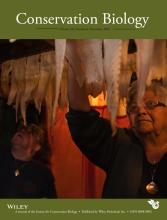
Sayan Banerjee Creating constellations of coexistence through connections between people in human–wildlife conflict areas https://conbio.onlinelibrary.wiley.com/doi/10.1111/cobi.14402 Green, A. R., Chakrabarti, S., Shivakumar, S., Hughes, C., Banerjee, S., Kinyanjui, M. W., ... & Thiemkey, A. R. (2024). Conservation Biology, 38(6), e14402. This article provides arguments through case studies across the world on how culture can be a great determinant of human-wildlife coexistence |
|
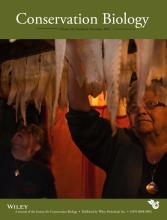
Anindya Sinha Adivasi (Tea Tribe) worldviews of living close to wild Asian elephants in Assam, India https://conbio.onlinelibrary.wiley.com/doi/10.1111/cobi.14397 Banerjee, S., Nayak, D., & Sinha, A. (2024). Adivasi (Tea Tribe) worldviews of living close to wild Asian elephants in Assam, India. Conservation Biology, 38(6), e14397. The article chronicles the multifaceted relations between the Adivasi( Tea Tribe) community and the wild Asian elephants in the Udalguri district of Assam, India |
|
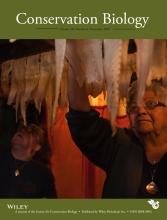
Sayan Banerjee Adivasi (Tea Tribe) worldviews of living close to wild Asian elephants in Assam, India https://conbio.onlinelibrary.wiley.com/doi/10.1111/cobi.14397 Banerjee, S., Nayak, D., & Sinha, A. (2024). Adivasi (Tea Tribe) worldviews of living close to wild Asian elephants in Assam, India. Conservation Biology, 38(6), e14397. The article chronicles the multifaceted relations between the Adivasi( Tea Tribe) community and the wild Asian elephants in the Udalguri district of Assam, India |

|
Rudrodip Majumdar Comparison of Stratification Performance in Oil-based Thermal Storage Tank for Different Immersed Discharging Coil Configurations. https://avestia.com/ICAERA2024_Proceedings/files/paper/ICAERA_131.pdf Anas A.E. Ahmed, Rudrodip Majumdar and Sandip K. Saha (2024). In: Proceedings of the 5th International Conference on Advances in Energy Research and Applications (ICAERA 2024), 21-23 November 2024, Lisbon, Portugal. This study investigates the thermal stratification characteristics of a single-medium sensible heat storage tank. The thermal energy storage (TES) system under investigation comprises a vertical cylindrical tank fitted with an immersed discharging coil. The study considers three different discharging coil configurations (helical, conical, and inverted conical). A commercial silicone oil (Hytherm 600) is used as the heat storage medium in the tank, and water serves as the discharging fluid. The thermal characteristics during the simultaneous charging and discharging operation are investigated considering a fixed charging temperature of 90 ℃, an oil flow rate of 1.25 L/min, and two different discharging flow rates (water), 0.5 and 2 L/min, respectively. Results indicate enhanced thermal performance for the helical discharging coil at the discharging flow rate of 2 L/min, with a total discharged energy of 3536.8 kJ, and a discharging efficiency of 54.1%. The highest energy discharged (3546.5 kJ) is realized in the case of the inverted conical coil. However, the losses are higher for this storage configuration, leading to a slightly reduced discharging efficiency (53.6%). The thermocline thickness broadens with increasing water flow rates through the discharging coil side. Eventually, the initial thermocline splits to form a stabilized thermocline thickness of 100 mm in the upper section of the tank for a 2 L/min coil flow rate. |

|
C P Rajendran Sedimentary records of liquefaction from central Kerala (southwestern India), as earthquake indicators in a cratonic area https://www.sciencedirect.com/science/article/pii/S1367912024003687?dgcid=coauthor Co-Authored with Biju John and Yogendra Singh, Journal of Asian Earth Sciences. Vol.277: 106373. Spread over 100 sq. km, the liquefaction features identified in central Kerala, suggest moderate-magnitude earthquakes in the past. |

|
Ramya Bala Prabhakaran DST-INSPIRE Faculty Fellow, School of Natural Sciences and Engineering Learning from the past: Collaborating across times for landscape management for conservation. https://www.currentscience.ac.in/Volumes/127/08/0893.pdf Agarwala, M., Bala, P. R., Kulkarni, C., Sukumar, R., Quamar, M. F., Tripathi, S., ... & Anupama, K. (2024). Learning from the past: collaborating across times for landscape management for conservation. Current Science (00113891), 127(8). |