
Publications
|
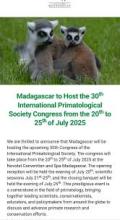
Anindya Sinha Tools maketh the macaque: Unique multipurpose tool use and manufacture by wild bonnet macaques Macaca radiata in southern India https://ipsmadagascar.org/ Pal, A., Mukhopadhyay, K., Leca, J. B., & Sinha Anindya. (2025, July 20-25). Tools maketh the macaque: Unique multipurpose tool use and manufacture by wild bonnet macaques Macaca radiata in southern India. 30th International Primatological Society Congres |
|
R Srikanth Assessing water consumption in Indian thermal power plants and parametric strategy for optimal usage: An explanatory approach using machine learning algorithms https://www.sciencedirect.com/science/article/abs/pii/B9780443267499000181 Das Sherin S., Rudrodip Majumdar, A.V. Krishnan and R. Srikanth (2025). In: Water use efficiency, sustainability and the circular economy edited by Suhaib A. Bandh, Fayaz A. Malla and Anthony Halog. Elsevier, pp. 301-324. |
|
A V Krishnan Assessing water consumption in Indian thermal power plants and parametric strategy for optimal usage: An explanatory approach using machine learning algorithms https://www.sciencedirect.com/science/article/abs/pii/B9780443267499000181 Das Sherin S., Rudrodip Majumdar, A.V. Krishnan and R. Srikanth (2025). In: Water use efficiency, sustainability and the circular economy edited by Suhaib A. Bandh, Fayaz A. Malla and Anthony Halog. Elsevier, pp. 301-324. |

|
Rudrodip Majumdar Assessing water consumption in Indian thermal power plants and parametric strategy for optimal usage: An explanatory approach using machine learning algorithms https://www.sciencedirect.com/science/article/abs/pii/B9780443267499000181 Das Sherin S., Rudrodip Majumdar, A.V. Krishnan and R. Srikanth (2025). In: Water use efficiency, sustainability and the circular economy edited by Suhaib A. Bandh, Fayaz A. Malla and Anthony Halog. Elsevier, pp. 301-324. |
|
Nithin Nagaraj DiffusionScore: A Framework for Assessing Institutional Research Impact Through Influence Diffusion https://ieeexplore.ieee.org/document/11062458 Sampatrao, G. S., Khetan, A., Nagaraj, N., Saha, S., Dey, S. R., & Mathur, A. (2025). DiffusionScore: A Framework for Assessing Institutional Research Impact Through Influence Diffusion. IEEE Access. |

|
M Jayananda Archean crustal evolution and building of habitable continents:Insights from the Western Dharwar Craton https://www.sciltp.com/journals/hp/articles/2509001599 Aadhiseshan, K. R., & Jayananda, M. (2025). Archean crustal evolution and building of habitable continents: Insights from the Western Dharwar Craton. Habitable Planet, 1(1&2), 197-221. |
|
Anindya Sinha To Be or Not to Be Conscious: Reflections on the Phenomenological Complexity of the Macaque Mind https://journals.sagepub.com/doi/10.1177/10597123251356934 Sinha, A. (2025). To Be or Not to Be Conscious: Reflections on the Phenomenological Complexity of the Macaque Mind. Adaptive Behavior. One of the most difficult aspects of studying consciousness scientifically, particularly in other-than-humans, is to develop functional definitions for the phenomenon in non-verbal beings, wherein consciousness has to manifest itself in behavioural actions that can be unambiguously ascribed to being products of conscious states of the mind. In this paper, I offer glimpses into the phenomenologically complex minds of wild individual bonnet macaques Macaca radiata – a cercopithecine nonhuman primate endemic to peninsular India – examined through deep naturalistic observations of their cognitive decision-making processes. Such explorations, I believe, are critically important, in not only revealing the innovative responses of these cognitive beings to the pathological complexity presented by the socioecological realities of the everyday but also in uncovering the mechanisms by which these individuals may be able to ‘consciously’ synthesise their various subjective experiences to take novel decisions at different stages of their challenging life histories in the long term. |

|
Rudrodip Majumdar Energy Efficiency and Circularity: Insights from Adoption Trends of Washing Machines, Critical Materials Demand and Responsible Use Strategies https://www.sciencedirect.com/science/article/abs/pii/B9780443289491000011 Pandey, A., and Majumdar, R. (2025). Energy efficiency and circularity: insights from adoption trends of washing machines, critical materials demand, and responsible use strategies. In Energy Efficiency in Critical Times (pp. 3-18). Elsevier. |