
Publications

|
M Sai Baba World Marketing Day https://niascomm.in/2026/05/27/world-marketing-day/ SciComm@NIAS |
|
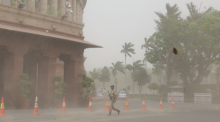
Gufran Beig Delhi’s dust pollution needs science, not seasonal optics https://indianexpress.com/article/opinion/columns/delhi-dust-pollution-science-optics-climate-change-10708919/ Beig, Gufran. (2026, May 26). Delhi’s dust pollution needs science, not seasonal optics. The Indian Express. |

|
Sanjay Kumar Srivastava India's response to heat crisis will define its future https://www.newindianexpress.com/opinion/2026/May/25/indias-response-to-heat-crisis-will-define-its-future Srivastava, Sanjay Kumar. (2026, May 26). India's response to heat crisis will define its future. The New Indian Express. |
|
MK Surappa Truth, Trust, and Integrity: Architecting the Future of Engineering https://cms.nias.res.in/sites/default/filesefs/2026-07/Chandrakanth%20Memorial%20Lecture%20by%20Prof.%20Surappa.pdf Prof. M. K. Surappa delivered the prestigious Dr. L. S. Chandrakant Memorial Lecture , at Jawaharlal Nehru New College of Engineering (JNNCE), Shivamogga. |

|
R Srikanth Impact Assessment of Weather and Climate Services of the India Meteorological Department (Phase-I: Agrometeorological Advisory Services) https://cms.nias.res.in/sites/default/filesefs/2026-07/2026-RR-02-Impact%20Assessment%20of%20Weather%20and%20Climate%20Services%20of%20the%20India%20… Nannewar, Rakesh Gomaji and Unnikrishnan, Anjaly and Kasiraju, Charumathi and Kruthika, S and Kanitkar, Tejal and Srikanth, R (2026) Impact Assessment of Weather and Climate Services of the India Meteorological Department.. . Report. NIAS, Bengaluru. Nannewar, Rakesh Gomaji and Unnikrishnan, Anjaly and Kasiraju, Charumathi and Kruthika, S and Kanitkar, Tejal and Srikanth, R (2026) Impact Assessment of Weather and Climate Services of the India Meteorological Department.. . Report. NIAS, Bengaluru. |
|
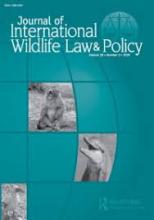
V V Binoy From attitudes to actions: Bridging conservation planning framework, theory of planned behaviour and social values to protect charismatic freshwater fishes, the Mahseer https://www.tandfonline.com/doi/full/10.1080/13880292.2026.2666482#abstract Das, P., & Binoy, V. V. (2026). From attitudes to actions: Bridging conservation planning framework, theory of planned behaviour and social values to protect charismatic freshwater fishes, the Mahseer. Journal of International Wildlife Law & Policy. This paper discusses a new approach to integrate behaviour change theories and social values of natural resources (here mahseer) into the conservation planning |

|
Rudrodip Majumdar Geospatial analysis of land-use and land-cover changes in the Sikkim Himalaya, and insights for sustainable future https://link.springer.com/chapter/10.1007/978-3-032-12737-2_6 Bharati, Karshita., Jins, V. J., Rai, S., Majumdar, Rudrodip., Nandy, S., & Chettri, B. (2026). In S. Ghosh et al. (Eds.) Geospatial solutions for ecological challenges and sustainability (pp. 107-128). Springer. Our study analysed LULC changes between 1998 and 2018 in the East and South districts of Sikkim using multispectral Landsat imagery (Landsat 5 TM and Landsat 8 OLI/TIRS). We applied supervised classification with the Maximum Likelihood Classifier (MLC) and employed post-classification change detection techniques. The findings showed that built-up areas mainly expanded at the expense of agricultural land and vegetation, underscoring the unsustainable trajectory of the ongoing land use patterns. With these findings, we strongly recommend a sustainable planning of future developmental activities by encouraging traditional agricultural and responsible land use practices, while conserving the rich regional biodiversity. |

|
Sanjay Kumar Srivastava Climate-induced loss and damage at 2°C: Economic risk and inequality in India https://www.researchsquare.com/article/rs-9736683/v1 Srivastava, Sanjay Kumar. (2026). Climate-induced loss and damage at 2°C: Economic risk and inequality in India. Research Square. |