
Publications
|
C P Rajendran Destruction, desertion, ruin, and restoration: Earthquake impact on medieval monuments in central India https://doi.org/10.11588/hasp.1818.c28029 Singh, S., Simone, D. D., & Rajendran, C. P. (2026). In V. Angermeier, P. Zeitlhuber (Eds.) Calamities and countermeasures in pre-modern South Asia: Textual, archaeological and epigraphic approaches... (pp. 123-154). Heidelberg Asian Studies Publishing. |
|
Biju Dharmapalan The jeewanu story: Rebuilding the beginnings of life https://cms.nias.res.in/sites/default/filesefs/2026-10/The_Jeewanu_Story-Science_India.pdf Jyothish, M. S., & Dharmapalan, Biju. (2026, September). The jeewanu story: Rebuilding the beginnings of life. Science India 19. pp. 30-34. |

|
M Sai Baba World Pharmacists Day https://niascomm.in/2026/09/27/world-pharmacists-day/ SciComm@NIAS Every medicine has a story, from its discovery and development to its manufacture, distribution, and eventual use by a patient. Pharmacists play an important role in this journey. Pharmacy is a truly global profession; there are ~5.57 million pharmacists licensed or registered across 83 countries. |

|
Mrittunjoy Guha Majumdar Quantum neuromorphic computing: Harnessing noise and adaptation for scalable quantum processors https://link.springer.com/article/10.1007/s10791-026-10415-3 Guha Majumdar, Mrittunjoy. (2026). Quantum neuromorphic computing: Harnessing noise and adaptation for scalable quantum processors. Discover Computing 29. Article 656. |

|
V V Binoy Mahseer breeding and stocking: Insights from studies on scientific literature, newspapers and social media https://osf.io/preprints/mediarxiv/nxrvd_v1 Rawat, Mahendra Singh., Krishnan, Ayana., Das, Prantik., & Binoy, V. V. (2026). Mahseer breeding and stocking: Insights from studies on scientific literature, newspapers and social media. MediArXiv. Insights into the breeding and stocking of all known mahseer species through an integrated analysis of the scientific publications available on multiple databases, English newspapers published from their distribution range, and the social media (YouTube, Facebook, Xand Instagram) posts and the public engagement they received. |

|
Ayana Krishnan Mahseer breeding and stocking: Insights from studies on scientific literature, newspapers and social media https://osf.io/preprints/mediarxiv/nxrvd_v1 Rawat, Mahendra Singh., Krishnan, Ayana., Das, Prantik., & Binoy, V. V. (2026). Mahseer breeding and stocking: Insights from studies on scientific literature, newspapers and social media. MediArXiv. Insights into the breeding and stocking of all known mahseer species through an integrated analysis of the scientific publications available on multiple databases, English newspapers published from their distribution range, and the social media (YouTube, Facebook, Xand Instagram) posts and the public engagement they received. |

|
Mahendra Singh Rawat Mahseer breeding and stocking: Insights from studies on scientific literature, newspapers and social media https://osf.io/preprints/mediarxiv/nxrvd_v1 Rawat, Mahendra Singh., Krishnan, Ayana., Das, Prantik., & Binoy, V. V. (2026). Mahseer breeding and stocking: Insights from studies on scientific literature, newspapers and social media. MediArXiv. Insights into the breeding and stocking of all known mahseer species through an integrated analysis of the scientific publications available on multiple databases, English newspapers published from their distribution range, and the social media (YouTube, Facebook, Xand Instagram) posts and the public engagement they received. |
|
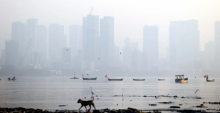
Gufran Beig Mumbai spent Rs 493 crore for clean air, and on around 1,000 ‘missing’ EV buses https://indianexpress.com/article/cities/mumbai/rs-493-crore-spent-e-buses-bmc-mumbai-clean-air-10891903/ Beig, Gufran. (2026, September 24). Mumbai spent Rs 493 crore for clean air, and on around 1,000 ‘missing’ EV buses. The Indian Express. |