
Publications
|
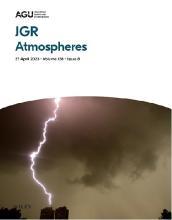
Vinay Kumar Dadhwal Multi-Year CALIPSO Observations of Ubiquitous Elevated Aerosol Layer in the Free Troposphere Over South Asia: Sources and Formation Mechanism https://agupubs.onlinelibrary.wiley.com/doi/10.1029/2021JD036277 Co-Authored with Kumar, G., Madhavan, B.L., Sahu, L.K., Kumar, Y.B., Vernier, J.P., Liu, H., Zhang, B., Pandit, A.K., Manchanda, R.K.& Sinha, P. R. . Journal of Geophysical Research: Atmospheres, 128(2), e2021JD036277 |
|
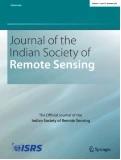
Vinay Kumar Dadhwal Assessment of Chlorophyll-a Seasonal Cycle in the North Indian Ocean Using Observations from OCM2, MODIS, and SeaWiFS https://link.springer.com/article/10.1007/s12524-022-01642-4 Co-Authored with Nayak, R.K., Swapna, M., Manche, S.S., Mohanty, P.C., Seshasai, M.V.R., Kumar, R. . Journal of the Indian Society of Remote Sensing 51, 229–246 |

|
Anindya Sinha Professor, School of Natural Sciences and Engineering Performance at the Urban Periphery – Insights from South India. https://www.routledge.com/Performance-at-the-Urban-Periphery-Insights-from-South-India/Turner-Srinivasan-Daboo-Sinha/p/book/9781032270135?srsltid=Afm… Turner, C., Srinivasan, S., Daboo, J., & Sinha, A. (2022). Performance at the urban periphery: Insights from south India. Routledge. |

|
R Srikanth co-authored Professor, Energy, Environment and Climate Change Programme Assessing equity in public transportation in an Indian city https://www.sciencedirect.com/science/article/abs/pii/S2213624X22001948 Co-authored with Ghosh, T. & Kanitkar, T. (2022). Assessing equity in public transportation in an Indian city. Case Studies on Transport Policy, 10(4), 2337-2349. |

|
Tanmay Ghosh co-authored Assessing equity in public transportation in an Indian city https://www.sciencedirect.com/science/article/abs/pii/S2213624X22001948 Co-authored with Kanitkar, T. & Srikanth, R. (2022). Assessing equity in public transportation in an Indian city. Case Studies on Transport Policy, 10(4), 2337-2349. |

|
Tejal Kanitkar co-authored Associate Professor, Energy, Environment and Climate Change Programme Assessing equity in public transportation in an Indian city https://www.sciencedirect.com/science/article/abs/pii/S2213624X22001948 Co-authored with Ghosh, T. & Srikanth, R. (2022). Assessing equity in public transportation in an Indian city. Case Studies on Transport Policy, 10(4), 2337-2349. |
|
G Parthasarathy Adjunct Faculty, School of Natural Sciences and Engineering Human Future in Digital Era CURRENT SCIENCE, Vol. 123 (12) pp 1519-1520 |

|
Ashni Kumar Dhawale co-authored Doctoral Student, Animal Behaviour and Cognition Programme Far from home: The synurbisation of a rainforest-evolved primate, the lion-tailed macaque Macaca silenus, and its recent adaptations to anthropogenic habitats in southern India https://link.springer.com/epdf/10.1007/s12038-022-00306-2?sharing_token=RMGurhfNWdVmEoLbgWhBU_e4RwlQNchNByi7wbcMAY7nZCi-nHaDwBETY6x0Ta6MV-rnB_82KAsBO… Co-authored with Anindya Sinha. Journal of Biosciences, Vol. 47 (76)
|