
Publications

|
Anindya Sinha Professor, School of Natural Sciences and Engineering Performance at the Urban Periphery – Insights from South India. https://www.routledge.com/Performance-at-the-Urban-Periphery-Insights-from-South-India/Turner-Srinivasan-Daboo-Sinha/p/book/9781032270135?srsltid=Afm… Turner, C., Srinivasan, S., Daboo, J., & Sinha, A. (2022). Performance at the urban periphery: Insights from south India. Routledge. |

|
R Srikanth co-authored Professor, Energy, Environment and Climate Change Programme Assessing equity in public transportation in an Indian city https://www.sciencedirect.com/science/article/abs/pii/S2213624X22001948 Co-authored with Ghosh, T. & Kanitkar, T. (2022). Assessing equity in public transportation in an Indian city. Case Studies on Transport Policy, 10(4), 2337-2349. |

|
Tanmay Ghosh co-authored Assessing equity in public transportation in an Indian city https://www.sciencedirect.com/science/article/abs/pii/S2213624X22001948 Co-authored with Kanitkar, T. & Srikanth, R. (2022). Assessing equity in public transportation in an Indian city. Case Studies on Transport Policy, 10(4), 2337-2349. |

|
Tejal Kanitkar co-authored Associate Professor, Energy, Environment and Climate Change Programme Assessing equity in public transportation in an Indian city https://www.sciencedirect.com/science/article/abs/pii/S2213624X22001948 Co-authored with Ghosh, T. & Srikanth, R. (2022). Assessing equity in public transportation in an Indian city. Case Studies on Transport Policy, 10(4), 2337-2349. |
|
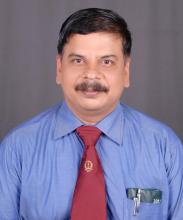
G Parthasarathy Adjunct Faculty, School of Natural Sciences and Engineering Human Future in Digital Era CURRENT SCIENCE, Vol. 123 (12) pp 1519-1520 |

|
Ashni Kumar Dhawale co-authored Doctoral Student, Animal Behaviour and Cognition Programme Far from home: The synurbisation of a rainforest-evolved primate, the lion-tailed macaque Macaca silenus, and its recent adaptations to anthropogenic habitats in southern India https://link.springer.com/epdf/10.1007/s12038-022-00306-2?sharing_token=RMGurhfNWdVmEoLbgWhBU_e4RwlQNchNByi7wbcMAY7nZCi-nHaDwBETY6x0Ta6MV-rnB_82KAsBO… Co-authored with Anindya Sinha. Journal of Biosciences, Vol. 47 (76)
|
|
Gufran Beig co-authored Professor, Energy, Environment and Climate Change Programme Assessment of hazardous radionuclide emission due to fly ash from fossil fuel combustion in industrial activities in India and its impact on the public https://www.sciencedirect.com/science/article/pii/S0301479722024811?via%3Dihub= Co-authored with M Mishra, SK Sahu, P Mangaraj. Journal of Environmental Management, Vol. 328 Traditionally coal has been extensively used as a dominating fossil fuel in a wide range of industries due to its abundance. In India, industries like thermal power plants, cement industries, iron, and steel industries along with many captive power plants consume a huge quantity of coal each year to meet energy demand. The potential radionuclide hotspot regions across the nation are identified, which could be used as an important tool to assess its impact on the chronic exposure of millions of residents living near these sources. Cleaner or green energy could be the best alternative to combat the unseen health disaster. More effective and safe utilization of fly ash can minimize the hazardous effect of radionuclides emission. |
|
Gufran Beig co-authored Professor, Energy, Environment and Climate Change Programme Understanding the influence of Summer Biomass Burning on Air Quality in North India: Eight Cities Field Campaign Study https://www.sciencedirect.com/science/article/abs/pii/S0048969722074630?via%3Dihub= Co-authored with R Khaiwal, T Singh, V Singh, S Chintalapati, and S Mor. Science of the Total Environment, Vol. 861 Near real-time monitoring of major air pollutants, i.e., particulate matter (PM10, PM2.5, PM1), trace gases (O3, CO, NO, NO2, NOx, NH3, CO2, SO2) and Volatile Organic Compounds (VOCs: benzene, ethylbenzene, m-, p-xylene, o-xylene and toluene) along with climatological parameters was done in eight-cities field campaigns during the rabi (wheat) crop residue burning period in the northwest of Indo-Gangetic Plain (IGP) region. This multi-city study observed that semi-urban regions have the most compromised air quality during the rabi crop residue burning and need attention to address the air quality issues in the IGP region. |